Categories
Bristol Coaching Life Coaching

Improv Skills for Teaching in ‘The Artistry of Teaching’

Sometimes life takes you to unexpected places, and those places can be both thrilling and meaningful. I’ve had many changes in my personal life recently, one of which is fulfilling a life-long dream of mine. 

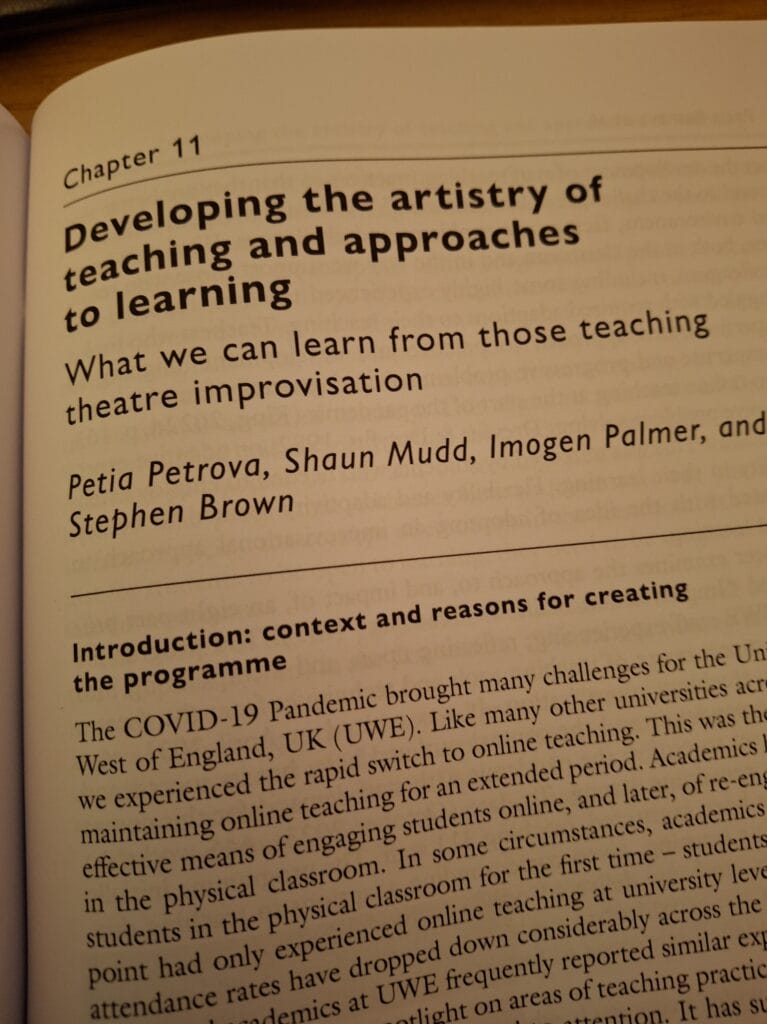
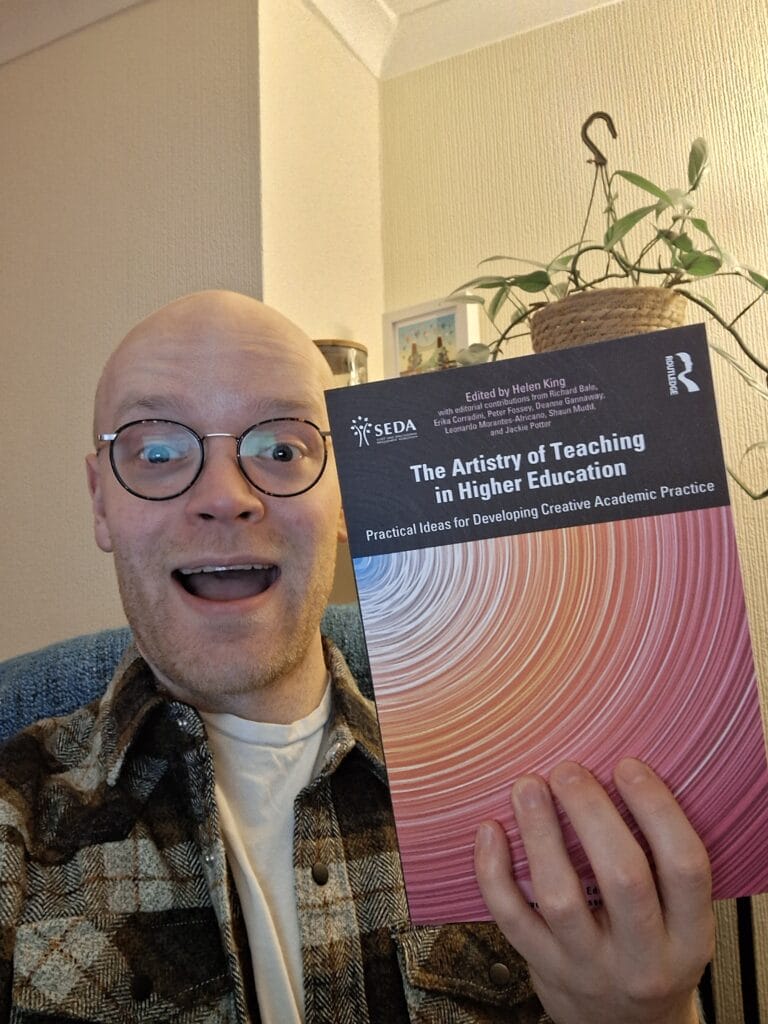
I’m over the moon to share that I’ve been featured in a book for the very first time! 🎉 The book, The Artistry of Teaching in Higher Education, is a collection of practical and creative ideas designed to inspire and elevate university teaching practices, specifically aimed at university educators looking to enhance their teaching with creative approaches. One of the chapters focuses on a course that my friend Imo and I created together at the Bristol Improv Theatre called “Improv Skills for Teaching,” designed specifically for university educators who are looking to enhance their teaching with creative techniques. 

It feels incredible to see the work that we’ve done being recognised in this way. The chapter I contributed to, written by colleagues from UWE Dr Petia Petrova and Dr Shaun Mudd, explores how improvisational theatre techniques can be used to support effective and engaging teaching practices. We’re talking about building rapport, embracing imperfection, and creating spaces where everyone—students and teachers alike—can be brave. The kind of space where learning feels not just possible, but joyful.
Improv Skills for Teaching
I’m clearly trying to hide my excitement…

For more information on how you can incorporate improv principles into your everyday working life, check out my blog post on ‘Improv Skills for Work‘.

✨ The Spark

The journey started, like many good stories, in a moment of crisis: the pandemic. Universities had to pivot quickly to online teaching, and as anyone who had to shift their training, workshops, or teaching online will tell you, it wasn’t easy. For both students and educators, it was a challenging time that highlighted a deep need for connection, spontaneity, and flexibility. Suddenly, teaching required much more than just knowledge—it required a sense of artistry. That’s where our work with improvisation came in.

Petia was taking an online improv class at the time and began wondering how the principles of improv could translate into the online learning environment. We saw an opportunity to take the tools we’d been using on stage and apply them to the (now virtual) classroom. The skills we’d honed in improv—building trust, supporting each other, and embracing the unexpected—felt tailor-made for this new teaching environment. And so, “Improvisation Skills for Teaching” was born, a programme that invited educators to step outside their comfort zones, to be playful, and to reconnect with their own joy in teaching.

🗺️ The Journey

Working with Petia and Shaun, we developed and delivered the programme to staff at UWE (University of the West of England) and beyond. Since launching, we’ve run this programme for 13 cohorts, with the 14th coming up soon. Furthermore, it has reached educators at UWE, the University of Bristol, and St. George’s in London. It’s been an incredible ride, filled with laughter, growth, and some surprising revelations.

What’s so special about this programme is how it reminds us that education isn’t just about knowledge transmission – it’s about human connection (as anyone who has experienced a presentation where the person just reads off the slides will be able to attest to!). It’s about making the classroom a space where everyone feels they belong, even when everything is uncertain. And it turns out, improvisational theatre provides the perfect toolkit for that.

🔦 The Spotlight on Improv Skills for Teaching

So now, here we are, a few years after it all started, and our work has found its way into a book! The Artistry of Teaching in Higher Education is for educators looking to bring more creativity, connection, and authenticity into their teaching practice. It’s a guide for those who want to go beyond the traditional and embrace the messiness that often accompanies great teaching.

The chapter on improv skills is full of practical tools that educators can use to make their classrooms more inclusive, responsive, and, most importantly, human. You’ll find activities to help build rapport, encourage active participation, and—my personal favourite—embrace the value of getting it wrong sometimes. Because, as we teach in the course, we don’t ‘fail’, we ‘happy fail’ – because, if you don’t get things a bit wrong sometimes, are you really learning??

Key Takeaways from the Chapter

If you pick up the book (and I highly recommend you do if you’re interested in the art of teaching), here’s what you can expect from the chapter I contributed to:

  • Creating Positive Learning Environments: How to foster bravery and connection between students and educators, and why it’s essential to have the freedom to get things wrong.
  • Your Voice and Presence: Using improvisation to enhance communication skills, be authentic, and make genuine connections in the classroom.
  • Reframing the Teacher-Learner Dynamic: Approaching your teaching from an improv perspective allows you to remove the pressure from yourself as ‘teacher’ and ‘all-knowing-Yoda’ to a partner in the learning environment with the student. 

Conclusion

This moment is a “pinch-me” moment—because being published is something I’ve dreamed about, and here it is, in black and white. But it’s also a moment where people are beginning to recognise the tools of play, connection and engagement can be used, and might even be essential, to domains outside of the improv theatre. 

So, if you’ve ever wondered how improv can make you a better teacher—or just how it might make you more comfortable with life’s curveballs—please check out The Artistry of Teaching, or get in touch with me here or at the Bristol Improv Theatre to see how we might be able to work together!

Speak soon,

Ste 🍵


If you’re interested in personal development and self-improvement, why not sign up for my monthly(ish) newsletter where you’ll find practical tips and join a budding community of improvers?
Categories
AI Coaching Bristol Coaching Life Coaching

Top 10 ChatGPT Prompts for AI-Powered Personal Growth

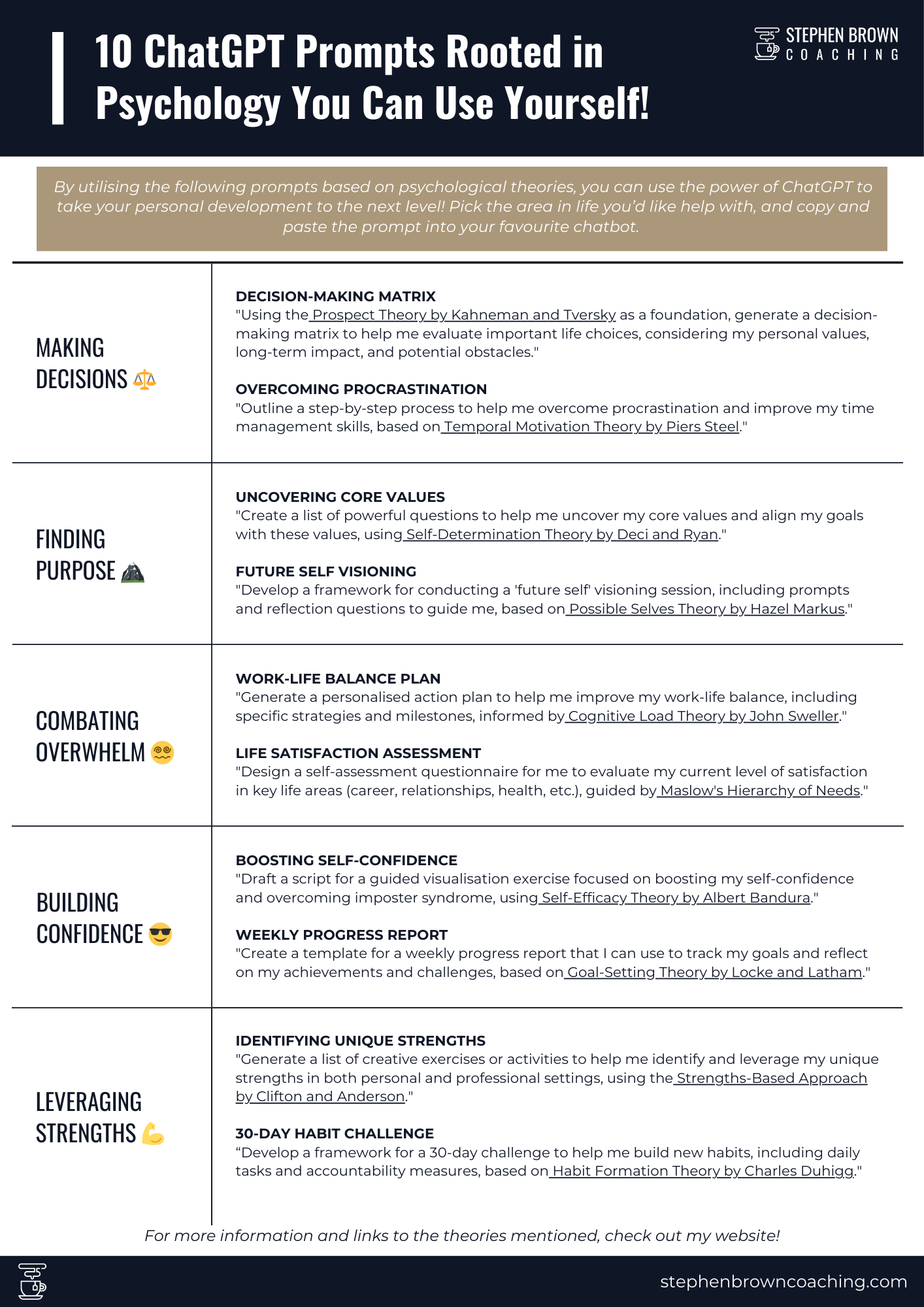
In this post, we’ll explore the top 10 ChatGPT prompts for personal growth, grounded in psychological theory. These prompts are designed to address common issues like decision-making, finding purpose, combating overwhelm, and building confidence. Ready to take your personal growth journey to the next level? Let’s dive in.

Looking for more ways to leverage ChatGPT as your personal coach? Check out my other posts in this series.

Overcoming ‘Sticking Points’

At certain points in life, we all face challenges that seem impossible to overcome. These ‘sticking points’ could be anything from struggling to find the motivation to get off the couch, to making critical decisions about your career, relationships, or lifestyle. You might also find yourself overcommitting, unable to say ‘no’ despite an already packed schedule.

One powerful way to move past these obstacles is by tapping into psychological insights to better understand your feelings and behaviours. However, while psychology provides the “why,” coaching—and tools like ChatGPT—help you take action. This combination of understanding and practical application is key to making meaningful progress.

The Power of ChatGPT in Coaching

The beauty of tools like ChatGPT is in their ability to distil and apply huge amounts of information almost instantly. With the right prompts, we can take psychological theories and generate personalised action plans, insightful questions, and creative exercises tailored to your specific situation.  

The Importance of Personalisation

Personalisation is key in coaching. Everyone’s brain is different and will respond to different things at different times. If this wasn’t the case there would just be a single self-help book and it would solve all our problems! 

So, by tailoring prompts to you and your specific issues, you can address individual needs effectively. Let’s explore these prompts categorised by common coaching challenges.

ChatGPT Prompts for Personal Growth

The Prompts, Their Categories, and Psychological Theories

Click here to download a cheat sheet summary of these prompts to use yourself!

Making Decisions ⚖️

  1. Decision-Making Matrix

Prompt: “Using the Prospect Theory by Kahneman and Tversky as a foundation, generate a decision-making matrix to help me evaluate important life choices, considering my personal values, long-term impact, and potential obstacles.”

  1. Overcoming Procrastination:

Prompt: “Outline a step-by-step process to help me overcome procrastination and improve my time management skills, based on Temporal Motivation Theory by Piers Steel.”

Finding Purpose 🏔️

  1. Uncovering Core Values:

Prompt: “Create a list of powerful questions to help me uncover my core values and align my goals with these values, using Self-Determination Theory by Deci and Ryan.”

  1. Future Self Visioning:

Prompt: “Develop a framework for conducting a ‘future self’ visioning session, including prompts and reflection questions to guide me, based on Possible Selves Theory by Hazel Markus.”

Combating Overwhelm 😵‍💫

  1. Work-Life Balance Plan:

Prompt: “Generate a personalised action plan to help me improve my work-life balance, including specific strategies and milestones, informed by Cognitive Load Theory by John Sweller.”

  1. Life Satisfaction Assessment:

Prompt: “Design a self-assessment questionnaire for me to evaluate my current level of satisfaction in key life areas (career, relationships, health, etc.), guided by Maslow’s Hierarchy of Needs.”

Building Confidence 😎

  1. Boosting Self-Confidence:

Prompt: “Draft a script for a guided visualisation exercise focused on boosting my self-confidence and overcoming imposter syndrome, using Self-Efficacy Theory by Albert Bandura.”

  1. Weekly Progress Report:

Prompt: “Create a template for a weekly progress report that I can use to track my goals and reflect on my achievements and challenges, based on Goal-Setting Theory by Locke and Latham.”

Leveraging Strengths 💪

  1. Identifying Unique Strengths:

Prompt: “Generate a list of creative exercises or activities to help me identify and leverage my unique strengths in both personal and professional settings, using the Strengths-Based Approach by Clifton and Anderson.”

  1. 30-Day Habit Challenge:

Prompt: “Develop a framework for a 30-day challenge to help me build new habits, including daily tasks and accountability measures, based on Habit Formation Theory by Charles Duhigg.”

(learn more about how 30-day challenges can work here)

The Power of ChatGPT Prompts in Personal Growth

Using These Prompts Effectively

Integrating these prompts into your personal growth journey is simple. Start by selecting the prompts that align with your current goals. For additional tips and templates – why not sign up for my monthly newsletter?

ChatGPT is a powerful tool in the personal coaching toolkit. By using these tailored prompts, grounded in psychology, you can gain personalised support, foster your growth, and build towards the life you want. Start implementing these prompts today and witness the transformation!

Let me know how you get on! 

Speak soon,

Ste 🍵


If you’re interested in personal development and self-improvement, why not sign up for my monthly(ish) newsletter where you’ll find practical tips and join a budding community of improvers?
Categories
Coaching Life Coaching

Transform Your Life: Mastering Time Management and Priorities

Hey everyone! Stephen here 😊

Sometimes, a nugget of wisdom sticks with you for whatever reason. I recently heard on a podcast someone drop in the phrase “If you want to know someone’s priorities, look at their calendar”, before moving quickly on to the next topic. But this advice resonated deeply with me and sparked a significant change in how I manage my time.

Have you ever looked back at your week and wondered where all your time went? A few weeks ago, I had one of those moments. Between work, errands, and binge-watching Shogun on Disney+, my days were slipping by without me even realising it. 

That’s when the phrase from that podcast jumped back into my head and it got me thinking: how we spend our time truly reflects our priorities. So, I started changing the language I used… I shifted from “I don’t have time” to “That’s not a priority for me at the moment.”. For me, that subtle shift added accountability and more ownership of how I spent my time. 

So, if you’re feeling like your time is running away from you, stick around. Today, we’re diving into how to align your schedule with what really matters to you.

Time management priorities

Understanding Priorities

Priorities are the things that we deem most important in our lives. They are the values and goals that we aim to achieve and uphold. But here’s the kicker: if you’re not actively prioritising them, they often get lost in the shuffle of everyday life. It’s like trying to keep a cat off the kitchen counter – a futile effort… unless you’re really committed. And competitive. 

Why Knowing Your Priorities Matters

Knowing your priorities is crucial because it helps you make conscious decisions about how you spend your time. According to highly effective person Dr. Stephen Covey, author of “The 7 Habits of Highly Effective People,” effective time management isn’t about doing more; it’s about doing what’s most important.

Maybe you can resonate with being swamped with work, overwhelmed, yet still somehow finding time to scroll through social media for hours… (seriously, looking up my screen time made me change a lot). 

Maybe social media is one of your priorities. If so, great! For me though, it wasn’t. But I was nailing social media like it was one of my priorities. But it was an autopilot reaction. It hit me then – my actions (and therefore my actual priorities) weren’t aligning with what I wanted my priorities to be.

Instead of conquering my to-do list, I was becoming a champion of the latest DIY “build your own fridge entirely out of upcycled pallet wood” videos. It was like trying to fill a leaky bucket with water and wondering why my feet were always wet. Life, in its whimsical way, has a knack for showing us where our hearts truly lie, often through the most mundane of activities.

Practical Steps to Identify and Set Priorities

Let’s get practical! Here are some steps to help you identify and align your priorities with your daily activities:

🌟 Reflect on Your Values – Take a moment to think about what’s truly important to you. Is it family, career, health, or personal growth?

🏃‍♀️ Set Clear Goals – Once you’ve identified your values, set specific, actionable goals. For instance, if health is a priority, set a goal to exercise three times a week. (Need a hand goal-setting? Download my free worksheet!)

Track Your Time – Spend a week tracking how you spend your time. Apps like Toggl (not sponsored), checking your screen time, or just a simple journal can help you see where your hours are going. Spoiler alert: you might be surprised by how much time you spend scrolling through Instagram.

🌱 Evaluate and Adjust – After tracking your time, evaluate if it aligns with your priorities. If not, make adjustments. This might mean cutting back on TV time to fit in a workout or dedicating an hour each morning to personal development.

🗓 Create a Routine – Plan your days and weeks around your priorities. Use tools like calendars or planners to block out time for what matters most. It’s like setting a date with yourself. And you best not be ghosting yourself.

Shifting Your Mindset: From “I Don’t Have Time” to “That’s Not a Priority”

One of the most powerful shifts you can make is changing your language from “I don’t have time” to “That’s not a priority for me at the moment.” This shift puts the ownership back on you and makes you aware of your choices. It’s not about time; it’s about priorities.

When I started doing this, it was a game-changer. I realised that I wasn’t going for a run because I didn’t have time; it was because I wasn’t prioritising it. So, what was I prioritising instead? Viral dance videos. (Hey, they’re addictive…OK? It’s a real thing.) This honest reflection made me realise that I needed to start prioritising running. As soon as I acknowledged that, I could challenge myself to make running a priority. It was a wake-up call and exactly what I needed to shift my focus.

Common Obstacles and How to Overcome Them

We all face challenges when trying to align our time with our priorities. Here are a few common obstacles and how to tackle them:

🚫 Procrastination: It’s easy to put off important tasks. Try breaking them into smaller, manageable steps and reward yourself for completing them. As the old saying goes, “How do you eat an elephant? One bite at a time!” (Not that I endorse eating elephants, of course. They have wise eyes.)

🔔 Distractions: Minimise distractions by setting boundaries. This might mean turning off notifications during work hours or creating a dedicated workspace. Let’s be real – the world won’t end if you don’t reply to that WhatsApp message immediately.

🛑 Overcommitment: Learn to say no. It’s better to commit to fewer things and do them well than to spread yourself too thin. Remember, you’re not a superhero – even though your to-do list might make you feel like one.

Expert Insight

World champion of not using email, Dr. Cal Newport, author of “Deep Work,” (book review coming soon!) emphasises the importance of focused time blocks. He suggests, “The ability to concentrate intensely is a skill that must be trained.” By setting boundaries and dedicating time to your priorities, you can achieve greater focus and productivity. Think of it as training a puppy – with patience and consistency, it gets easier. It also gives you a bit more self-compassion… because you might kick yourself, but you wouldn’t kick a puppy.

Or why not try creating your own 30-day challenge?? More on that in a previous blog post here.

The Positive Impact of Prioritising Your Time

When you align your time with your priorities, the benefits are immense:

🧘 Improved Mental Health: Reducing the chaos in your schedule can lower stress and increase your overall well-being. It’s like clearing out the clutter in your house – suddenly, everything feels lighter.

Enhanced Productivity: Focusing on what truly matters boosts your productivity and helps you achieve your goals faster. It’s like driving on a clear road compared to navigating through traffic – you get to your destination much quicker.

👨‍👩‍👧 Better Relationships: Prioritising time for loved ones strengthens your relationships and creates lasting memories. It’s like watering a plant – with care and attention, it blossoms.

Conclusion

So there you have it! By understanding your priorities and making conscious choices about how you spend your time, you can lead a more intentional and fulfilling life. 

Remember, it’s not about doing more; it’s about doing what’s important. What steps will you take today to align your time with your priorities? Share your thoughts in the comments below, and let’s inspire each other to live our best lives! 💪

See you next time,

Stephen


If you’re interested in personal development and self-improvement, why not sign up for my weekly(ish) newsletter where you’ll find practical tips and join a budding community of improvers!
Categories
Bristol Coaching Life Coaching

Why Everyone Loves a Monthly Challenge for Achieving Goals

Today we’re talking about using the power of a monthly challenge for achieving goals! Let’s dive right in.

Ever felt stuck in a rut or struggled to keep up with your long-term goals? You’re not alone. Many of us set ambitious goals but find it hard to maintain momentum. Enter the 30-day challenge—a powerful tool that can help you achieve your goals, one month at a time. 

This is inspired by one of my favourite books, “Leap Year” by Helen Russell, in which she dedicates a month a year to focus on improving a particular aspect of her life: finances, health, relationships… etc. I’d 100% recommend giving it a read, both for the inspiration and her relatable and funny writing style!

So, in this post, we’ll explore why monthly challenges are so effective, backed by psychological theories and personal insights, including a little inspiration from “Leap Year”. 

The Power of a Monthly Challenge for Achieving Goals

Monthly challenges are simple yet powerful tools for personal growth. By committing to a specific goal for just 30 days, you can make significant progress without feeling overwhelmed. This bite-sized approach makes it easier to stay motivated and track your progress.

Monthly challenge for achieving goals
He might not know which numbers are involved in a monthly challenge… but he can paint…

The Psychology Behind Monthly Challenges

1. The Power of Habits

Habit Hero B.J. Fogg’s Behaviour Model emphasises that habits are formed through repetition and consistency. A 30-day challenge leverages this by providing a structured timeframe to develop new habits. Research shows it takes, on average, 21 to 66 days to form a new habit, making a month-long challenge an ideal period to instil new behaviours.

2. The Fresh Start Effect

The ‘fresh start effect,’ coined by Professor Katy Milkman, suggests that people are more likely to take action towards their goals following temporal landmarks such as the beginning of a new month. These moments provide a psychological reset, making it easier to adopt new behaviours. (Read more about this in my blog post on giving yourself a ‘life reset’)

3. The Commitment Device

Using a 30-day challenge as a commitment device can enhance your motivation and accountability. According to a study published in the Journal of Economic Behavior & Organization, commitment devices—self-imposed constraints that help individuals stick to their goals—can significantly improve goal achievement.

Why I Love 30-Day Challenges

I’ve always found 30-day challenges incredibly motivating. There’s something about the finite timeframe that makes goals feel more attainable. Whether it’s a fitness goal, a new hobby, or a productivity hack, dedicating a month to one specific challenge helps me focus and stay committed. Plus, the sense of accomplishment at the end of the 30 days is incredibly rewarding. Imagine tackling a new challenge each month, and by the end of the year, you’ll have twelve new achievements under your belt!

Practical Tips for Using a Monthly Challenge for Achieving Goals

1. Choose a Specific Goal

🎯 Be Clear and Specific: Whether it’s drinking more water, exercising daily, or learning a new skill, make sure your goal is clear and actionable. It’s essential to have a clear destination to find the best route.

2. Make a Plan

📝 Outline Your Steps: Break down your goal into manageable steps. Create a daily or weekly plan to stay on track. Plotting your journey with each step brings you closer to your destination.

3. Track Your Progress

📈 Keep a Journal: Documenting your progress can keep you motivated. Use a journal or an app to track your daily achievements and setbacks. Every entry marks your path forward.

4. Stay Accountable

👥 Find a Buddy: Sharing your challenge with a friend or joining a group can increase your accountability. Regular check-ins can help you stay committed.

5. Reflect and Adjust

🔄 Evaluate Your Progress: At the end of the month, reflect on what worked and what didn’t. Adjust your approach for future challenges. Review your journey to plan even better next time.

Overcoming Common Challenges

1. Mid-Month Slump

🚫 Stay Motivated: If you find your motivation waning, remind yourself why you started. Revisit your goals and the benefits of achieving them. Sometimes, a little pep talk with yourself can reignite that initial spark.

2. Perfectionism

🔥 Embrace Imperfection: Don’t let perfectionism hold you back. It’s okay to have off days. Focus on progress, not perfection.

3. Lack of Time

Prioritise Your Challenge: Make your challenge a priority. Schedule it into your day and treat it as a non-negotiable commitment. It’s essential for growth, no excuses.

Struggle with this? Check out my blog post on shifting your perspective and what you prioritise.

The Positive Impact of Monthly Challenges for Achieving Goals

Taking on monthly challenges can lead to profound personal growth. By consistently setting and achieving small goals, you build momentum and confidence. This can spill over into other areas of your life, helping you develop a growth mindset and a stronger sense of self-efficacy. It’s like climbing a mountain, one step at a time—each step builds your strength and brings you closer to the summit.

Helen Russell’s “Leap Year” is a testament to the power of embracing new challenges regularly, reinforcing the idea that you don’t need to wait for a special occasion to start fresh.

Conclusion

A 30-day challenge is a powerful way to kickstart new habits and achieve your goals. By leveraging psychological principles like habit formation, the fresh start effect, and commitment devices, you can stay motivated and make meaningful progress. Why wait? Start your monthly challenge today and see the positive impact it can have on your life.

Share your experiences in the comments below. Have you ever tried a 30-day challenge? What was your goal, and how did it impact you? Interested in more tips? Book a session to learn more.

Speak soon, everyone!

Stephen


If you’re interested in personal development and self-improvement, why not sign up for my weekly(ish) newsletter where you’ll find practical tips and join a budding community of improvers!
Categories
AI Coaching Coaching Life Coaching

AI-Assisted Goal Setting: A Modern Approach to Achievement

This post on AI-Assisted Goal Setting continues my exploration of how to use AI tools, such as ChatGPT, to improve our lives and act as our personal coach-in-a-pocket. Explore the full series here.


Ever set a goal and then promptly forgot about it? Yep, me too. But fear not, because in today’s world, we have AI-powered buddies like ChatGPT to help us out. Imagine having a personal coach who’s always there, never needs a coffee break, and doesn’t judge you for realising after 2 hours that you’ve been in a YouTube hole watching videos of puppies and toddlers being best friends… (dammit The Dodo). Let’s dive into how ChatGPT can transform your goal-setting game.

Understanding AI-Assisted Goal Setting

What is AI-Assisted Goal Setting?

Think of AI-assisted goal setting as having a digital Gandalf guiding you through your journey. ChatGPT helps you define, plan, and track your goals with the precision of a Swiss watch and the enthusiasm of a golden retriever.

The Importance of AI-Assisted Goal Setting

In the grand arena of goal-setting, AI tools are like having a secret weapon. Although research on goal-setting is still new, initial studies indicate that supporting your goal-setting with AI can help provide clarity, and additional clarity is never a bad thing in my experience of goal-setting!

Personal Story

When I first started using ChatGPT for my goal setting, I was sceptical. But as I interacted with the AI, I noticed a significant improvement in how I approached my goals. For instance, I’ve been wanting to write a novel for a while now (not to publish or anything, because it will be terrible, but because I want to learn and experience the process). Howver, I’ve struggled with planning and staying motivated. ChatGPT helped me break down the writing process into manageable chunks, provided regular check-ins, and even suggested strategies to overcome writer’s block.

It’s important to note that the story is still pretty terrible (but that’s a me thing rather than an AI thing!), but this support was invaluable and I’ve progressed a lot further than I ever thought I would.

AI-assisted goal setting
It must be so difficult to do pull ups when you’ve got a pole through your neck like the guy in the white…

Practical Steps to Leverage ChatGPT for Goal Setting

1. Goal Clarification and Refinement

First things first, let’s figure out what you actually want. With ChatGPT, you can brainstorm and refine your goals. For example, you might say: “I want to improve my public speaking skills. Can you help me break this down into specific, measurable objectives?”

And voilà, ChatGPT helps you transform vague aspirations into SMART (Specific, Measurable, Achievable, Relevant, Time-bound) goals. For more on improving your goal-setting, download my free workbook.

2. Action Plan Development

Got a goal? Great! Now, let’s make a plan that even your future forgetful self can’t ignore. Ask ChatGPT: “Based on my goal of improving public speaking, what are the key milestones I should aim for over the next six months?”

This way, you’ll have a roadmap to your goals.

💡Top Tip💡 For AI prompting and goal-setting, working backwards from where you want to be is useful. Ask yourself where you want to be, and by when. Then break it down into milestones.

3. Obstacle Identification and Mitigation

Roadblocks? Pfft. With ChatGPT, you’re always prepared. Ask: “What are common challenges people face when trying to improve their public speaking skills, and how can I overcome them?”

ChatGPT will equip you with strategies to tackle these hurdles head-on. Consider it your personal pep squad.

4. Progress Tracking

One month in and feeling lost? Fear not! Regular check-ins with ChatGPT keep you on track. Just ask: “I’ve been working on my public speaking for a month now. What questions should I ask myself to evaluate my progress?”

ALWAYS put a reflection date in your diary. Use it to reflect on your journey, celebrate those small wins, and adjust your strategy as needed. No more getting derailed by shiny distractions. 🐿️

5. Motivation and Accountability

Need a cheerleader? ChatGPT’s got you covered: “Can you provide me with a motivational message to stay committed to my public speaking goal this week?”

Regular pep talks and reminders keep you pumped and focused, like having a coach who’s always available, minus the whistle and stopwatch.

Some Example Prompts to Get You Started

To make the most of AI-assisted goal setting, here are some handy actions and example prompts for your ChatGPT sessions:

  1. 💪 Clarify Your Goals:
    • “I want to get fit. Can you help me break this down into specific, measurable goals?”
  2. 📋 Develop an Action Plan:
    • “Can you help me create a detailed plan to achieve my fitness goals over the next three months?”
  3. 🚧 Identify and Overcome Obstacles:
    • “What are some common challenges people face when trying to stick to a fitness routine, and how can I overcome them?”
  4. 📈 Track Your Progress:
    • “I’ve been following my fitness plan for two weeks. What should I review to ensure I’m on track?”
  5. 🔥 Stay Motivated and Accountable:
    • “Can you give me a motivational quote to keep me going with my fitness journey this week?”

The Positive Impact of AI-Assisted Goal Setting

By integrating ChatGPT into your goal-setting process, you’re not just setting objectives but creating a dynamic, responsive system that adapts to your needs and progress. This AI-assisted approach aligns with the principles of SMART goal setting while adding an extra layer of personalisation and support.

Conclusion

Remember, while ChatGPT is a powerful tool, the key to success still lies in your commitment and action. Use this AI assistant to enhance your goal-setting strategy, but always combine it with your own determination and effort.

As you embark on this journey of AI-assisted goal setting, keep in mind that the process is iterative. Regularly revisit and refine your goals with ChatGPT’s help, adjusting your approach as needed. With this innovative tool at your disposal, you’re well-equipped to turn your aspirations into achievements.

Speak soon!

Stephen 🍵


If you’re interested in personal development and self-improvement, why not sign up for my weekly(ish) newsletter where you’ll find practical tips and join a budding community of improvers!
Categories
Coaching Life Coaching

Life Reset, A Life Coach’s Guide – Why Wait?!

Hey everyone! It’s Stephen 😊. 

Have you ever felt the urge to start fresh but found yourself waiting for the perfect moment—the beginning of the year, the start of a new month, or even just waiting until Monday? Why do we do that? 

A few years ago, I wanted to start a meditation practice… It was Saturday, I was chatting with my housemate at the time who also wanted to start meditating, so we both agreed to start on Monday. Then we went on with our days, probably trying to make a chair out of pallets, or hanging out on our trampoline. But then I stopped for a moment and said… “why wait”?

We now say this as a bit of a joke, but actually, it’s enabled me to get things started a lot quicker. If I can’t think of a satisfying reason that I wouldn’t mind saying out loud to a friend, then I start the thing. 

So, if you’re pushing things back again and again, waiting for the perfect time to start (but never actually starting), stay tuned. Today, we’re exploring how to take charge and initiate a life reset whenever you feel ready.

The Psychology Behind a Fresh Start

Psychologists have long studied the ‘fresh start effect,‘ which suggests that people are more likely to take action towards their goals following temporal landmarks such as New Year’s Day or birthdays. These moments provide a sense of renewal and a psychological break from the past. However, waiting for these specific times isn’t necessary. Research shows that creating your own ‘temporal landmarks’ can be just as effective in initiating positive change. Imagine giving yourself permission to start over whenever you feel the need, no waiting required.

Life reset activity

Why Wait? Start Your Life Reset Now

1. Embrace the Present

One of the biggest advantages of not waiting for a traditional milestone is the empowerment it brings. When you decide to start now, you take control of your life and make a conscious choice to change. 

This can be incredibly motivating and set a positive tone for your journey. It’s like deciding to walk through an open door instead of waiting for someone to open it for you. It’s like that old saying: “The best time to plant a tree was twenty years ago. The second best time is now.”

2. Small Steps Lead to Big Changes

A life reset doesn’t have to be overwhelming. Start with small, manageable steps that contribute to your overall goal. This approach is supported by the concept of ‘micro habits,’ which suggests that small, consistent actions can lead to significant long-term changes. 

Remember, it’s the little things that often make the biggest difference. Think of it as planting seeds – one at a time – and watching a beautiful garden grow. Life, after all, is a series of small moments stitched together.

Practical Tips for Your Life Reset

1. Identify Areas for Change

🌟 Reflect on Your Current Situation – Take some time to assess where you are in different areas of your life—career, relationships, health, personal growth. Identify the areas where you feel dissatisfied or stuck. 

2. Set Clear, Achievable Goals

🎯 Define What Success Looks Like – Set specific, measurable, achievable, relevant, and time-bound (SMART) goals. This will help you stay focused and motivated. (For more help on setting goals, download my free goal-setting workbook!)

3. Create a Plan

📝 Develop a Roadmap – Outline the steps you need to take to achieve your goals. Break them down into daily or weekly tasks to make them more manageable. Interested in time management?

4. Monitor Your Progress

📈 Track Your Achievements – Keep a journal or use an app to monitor your progress. Celebrate small victories along the way to stay motivated. (Read more here about staying focused by treating your attention like your diet!)

5. Stay Flexible

🌊 Adapt and Adjust – Life is unpredictable, and it’s important to remain flexible. If something isn’t working, don’t be afraid to tweak your plan. Adjustments are a natural part of the process. Like a sailor adjusting the sails to catch the wind just right, sometimes we need to shift our plans to stay on course.

Overcoming Common Challenges

1. Fear of Failure

🚫 Embrace Imperfection – Understand that setbacks are a natural part of the process. Instead of fearing failure, view it as an opportunity to learn and grow. It’s a bit like learning to ride a bike – falling is part of the process, but each fall is a step closer to balance and before you know it you’ll be pulling wheelies. 

2. Lack of Motivation

🔥 Find Your Why – Reconnect with the reasons behind your desire for change. Reminding yourself of your ‘why’ can reignite your motivation. (Check out my ‘Finding Direction’ worksheet bundle if you want to deep-dive into this concept!)

3. External Pressures

🛡️ Set Boundaries – Protect your time and energy by setting boundaries. Communicate your goals and needs to those around you to garner support.

The Positive Impact of a Life Reset

When you take the initiative to start anew, the benefits can be profound. A life reset can lead to improved mental health, increased productivity, and a greater sense of fulfilment. By making a conscious decision to change, you open yourself up to new opportunities and experiences. 

It’s about taking control and steering your life in the direction you want to go. It’s like standing at the helm of your ship, charting a course towards a horizon filled with possibilities.

Conclusion

You don’t need to wait for the New Year, the start of the month, or even next Monday to reset your life. By embracing the present and taking small, actionable steps, you can initiate a fresh start anytime. Reflect on your goals, create a plan, and stay flexible as you navigate your journey. Remember, the best time to start is now.

Share your experiences in the comments below. Have you ever initiated a life reset outside of traditional milestones? How did it impact you? Interested in more tips? Book a session to learn more. Or join my newsletter! Info below.

Speak soon!

Stephen


If you’re interested in personal development and self-improvement, why not sign up for my weekly(ish) newsletter where you’ll find practical tips and join a budding community of improvers!
Categories
Coaching Life Coaching

Screw Motivation, Use Systems Thinking for Personal Development

Hey everyone, Stephen here 😊. Let me introduce you to ‘Systems Thinking for Personal Development’ – One concept that has given me and my clients a lot of success.


Ever find yourself pumped about a new goal, only to see that motivation fizzle out in a matter of weeks? Even with my experience as a life coach and knowledge of human psychology, I still get caught in that same cycle sometimes! 

Does this sound familiar? You set a sparkly new goal, get all fired up, and then a few days later… nothing. Excitement vanished. Back to square one.

Well, you’re not alone (there are at least two of us!), and, luckily there’s a smarter way to approach personal development, and it doesn’t rely on fleeting motivation. Let me introduce you to a concept called ‘Systems Thinking’ – which I promise is not as complicated as it sounds. Let’s dive in.

What Is ‘Systems Thinking’?

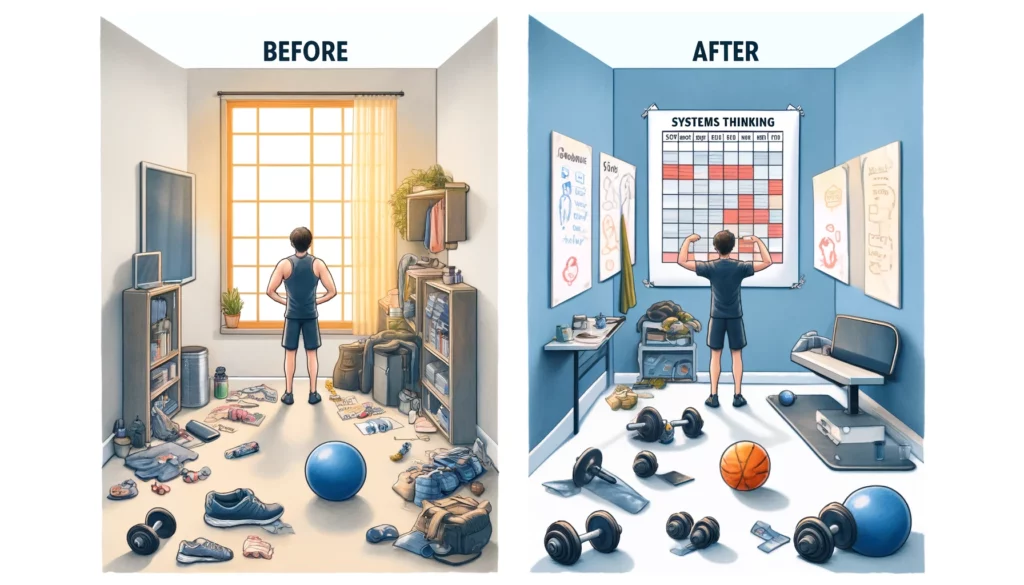
Systems thinking is stepping back and looking at the bigger picture. Instead of focusing on individual tasks or goals, you create a system that naturally leads to success. Think of it as designing your environment and habits to work for you, not against you. 

All-around clever business bloke (to use his full title) Dr. W. E. Deming stated that “Every system is perfectly designed to get the result that it does”.

Now Deming was talking about business, but this approach isn’t just for engineers or business strategists; it’s a game-changer for personal development too. Let’s explore how we can apply it. 

Why Motivation Isn’t Enough

Motivation is a sugar rush. It feels great at the start, but it doesn’t last. According to habit hero James Clear, author of “Atomic Habits”, relying solely on motivation is like running on a treadmill: you’re expending energy but not necessarily getting anywhere. The key to improving is to create a sustainable system that keeps us on track even when our initial enthusiasm wanes.

Systems thinking for personal development
Even Systems Thinking can’t make some people tidy… Look how happy he is without a window, though.

The Importance of Systems

Imagine trying to grow a garden without setting up proper irrigation or choosing the right plants for your soil. You’d be frustrated with the lack of results, right? The same goes for personal development. Without the right systems in place, we’re setting ourselves up for failure. Systems thinking helps us focus on the processes and routines that lead to achieving our goals, making success almost inevitable.

Personal Story: My Shift to Systems Thinking for Personal Development

A few years months hours ago, I was struggling to stick to a fitness routine. I’d start strong, but my motivation would dip, and I’d skip workouts. Then, I discovered systems thinking. Instead of relying on motivation, I created a system: I set up my workout clothes the night before, scheduled workouts at a consistent time, and (because I’m a sucker for peer pressure) I found a workout buddy. This system made it easier to stick to my routine, and I started seeing real progress.

Practical Steps to Implement Systems Thinking for Personal Development

  • 📌 Identify Your Goals: Start with clear, specific goals. What do you want to achieve?
  • 📝 Break Down the Process: Identify the steps needed to reach your goals.
  • 🗓️ Create a Routine: Design a daily or weekly routine that incorporates these steps.
  • 🛠️ Set Up Your Environment: Arrange your environment to support your routine. For example, keep healthy snacks visible if you’re trying to eat better.
  • 📊 Track Your Progress: Use a journal or app to monitor your progress and make adjustments as needed.

Overcoming Common Challenges

Transitioning to systems thinking can be tough. You might miss the instant gratification that comes with initial motivation. But remember, systems thinking is about the long game. I’ve spoken about Mindset Maestro Dr Carol Dweck in my blog previously. She emphasises the importance of a growth mindset – believing that abilities can develop through dedication and hard work. When setbacks happen, see them as part of the process and learn from them.

The Positive Impact of Systems Thinking for Personal Development

When I embraced systems thinking, the benefits were incredible. I wasn’t just more consistent with my workouts; I felt less stressed and more in control of my life. Instead of feeling bad and chastising myself for not working out, I started to view it as an experiment. Instead reacting more along the lines of: “Well that didn’t work, I clearly haven’t figured out the right system yet… let’s tweak a few things”. 

Systems thinking doesn’t just help you achieve your goals; it creates a structure that supports ongoing growth and improvement.

Conclusion

So, if you’re tired of relying on motivation and ready to see real, lasting change, it’s time to embrace systems thinking. Set up your environment, create supportive routines, and watch as your goals become achievable milestones. What systems can you implement today to move closer to your goals? 

Share your thoughts in the comments below or book a session to learn more about how systems thinking can transform your life. Looking forward to hearing from you!

See you next time,

Stephen


If you’re interested in personal development and self-improvement, why not sign up for my weekly(ish) newsletter where you’ll find practical tips and join a budding community of improvers!
Categories
Coaching Life Coaching

Improve Your Attention – Treat it Like Your Diet

How can we improve our attention and focus? Ironically, I came across this concept originally when I was knee-deep in a YouTube binge… 

Ever convince yourself that because you’re watching productivity videos, you’re actually doing something productive? That’s where I was, watching my 18th video in a row on ‘how to be more productive’, and not taking any action. At all.

Not productive.

Annoyingly, I can’t find the original clip. But the gist of the video really hit home; why do we focus more on what we consume for our bodies than our minds? What would happen if we started to treat our attention and focus, like our diet? 

Imagine your attention is like your diet for a second… Just as you wouldn’t binge on junk food without expecting some consequences, we also can’t be consuming junk media or wasting our focus on trivial matters without expecting some impact on our mental health. 

This small shift in perspective has really impacted the way I spend my day, and consider what I focus on. Let’s explore why treating your attention with the same care as your diet can lead to a more fulfilling, productive life.

How to improve your attention

The Hidden Calories of Attention

In the hustle and bustle of our daily lives, it’s easy to overlook how we spend our attention. You’re supposed to have a job, pay taxes, and remember all your various passwords. All while scrolling through social media, binge-watching series, and keeping up with the latest news. It’s a lot to juggle, and often, our attention gets scattered, leaving us feeling overwhelmed and unfulfilled.

Just as empty calories from junk food can lead to physical health issues, consuming content without thought can lead to mental clutter and stress. Research by Dr. Gloria Mark (2008) found that it takes an average of 23 minutes and 15 seconds to regain focus after an interruption. No matter how good you think you are at multitasking, constantly switching tasks and checking notifications can prevent us from diving deeply into any one activity. Much like grazing on snacks can prevent us from enjoying a proper meal.

Mindful Consumption: A Balanced Attention Diet

So, how do we ensure our attention diet is as balanced as our food diet? The answer lies in mindful consumption. Just as you plan your meals to include a variety of nutrients, you can plan your attention to include a mix of productive, relaxing, and enjoyable activities.

  • 🎯Start Your Day with Intention: Instead of diving straight into emails or social media, take a moment to plan your day. Decide what your main focus will be and set clear, achievable goals. This sets a positive tone and helps you stay on track.
  • 🌴Scheduled Breaks: Allow yourself regular breaks throughout the day. Use these breaks to recharge with activities that genuinely relax you, like a short walk or a few minutes of meditation. This prevents burnout and keeps your energy levels steady.
  • 🏆Quality Over Quantity: Just as you might choose a few pieces of high-quality chocolate over a whole bag of sweets, choose a few high-quality sources of information or entertainment. Read a well-researched article instead of skimming headlines, or watch a thought-provoking documentary instead of mindless TV.

Improve Your Attention: The Power of No

One of the most powerful tools to improve our attention and focus is learning to say no. It’s not about shutting out the world but about making deliberate choices. Psychologist Dr. Roy Baumeister’s (1998) research on willpower shows that it’s a finite resource. Every decision you make throughout the day depletes your willpower, making it harder to make good choices later on. By saying no to unnecessary distractions, you conserve your mental energy for what truly matters.

Practical Applications

One of the easiest ways I’ve found to incorporate this into my day-to-day life is by becoming a bit more mindful of what I’m doing. Then trying to swap out some unhealthy habits with more healthy ones, one step at a time. 

So, next time you notice yourself on autopilot, doom scrolling, or seeing that judgy Netflix pop-up asking if you’re still watching for the 7th time that day… maybe switch things up a bit. Think about what would be a healthy way you can treat your mind at that moment.

  • Maybe try watching a documentary or educational video instead of a reality TV show
  • Spend some time each day in nature, even if it’s just for a few minutes.
  • Maybe next time you pick up your phone to scroll on social media – try picking up a book instead
  • Explore different ways to focus and give yourself a break, like the Pomodoro Technique

Feed Your Mind with Positive Input

Just as a healthy diet includes a variety of nutrients, a healthy attention diet includes a variety of mental inputs. Reading books, listening to educational podcasts, or engaging in meaningful conversations can enrich your mind and broaden your perspective. Choose content that challenges and inspires you rather than just entertains.

Conclusion: A Fulfilling Attention Diet

Treating your attention like your diet is about making conscious choices. You can improve your attention and focus. You can enhance your productivity and well-being. Just by being mindful of what you consume mentally, setting intentions, and taking breaks. It’s not about being perfect but about making better choices more often.

Note: It is NOT about putting pressure on yourself to be more productive all the time! Much like you’re always looking for a balanced diet with your food, the same should be true for how you feed your mind. It’s OK to have a treat now and then. The key is having that balance and your choice being ‘on purpose’, and not just because you’re on autopilot. 

So, the next time you find yourself mindlessly scrolling or overwhelmed by notifications, remember: that your attention is a precious resource. Treat it with the same care and respect you give to your body. Maybe you’ll find yourself living a more focused, fulfilling life.

What do you think about this approach? What have you tried in the past? Let me know in the comments below!

See you soon!

Stephen


If you’re interested in personal development and self-improvement, why not sign up for my weekly(ish) newsletter, or click here to receive news of my future online courses?
Categories
AI Coaching Coaching Life Coaching

How to Make ChatGPT Your FREE Life Coach

Hey everyone! If you’re reading this you likely fall into one of two camps: you’re already sold on the benefits of AI and will give this a try straight after reading, or you’re still wary about AI and are wondering why everyone has forgotten about what happened with Skynet…

Well, fear not, by the end of this blog post, you’ll have all the information you need to turn your friendly AI chatbot (like Gemini, or ChatGPT) into your very own FREE AI Life Coach!

… Well… Sort of.

I previously explored leveraging ChatGPT for personal growth, but their new voice chat feature is a game changer. Let’s dive in and see how to use this for self-improvement, with a healthy dose of reality (because a robot therapist isn’t quite there… yet).

ChatGPT Life Coach AI

ChatGPT Life Coach: How to use AI for Self-Improvement

First things first: ChatGPT can’t replace a real-life coach. For all its incredible functionality, it’s still a relatively blunt instrument in comparison. It can’t read body language, give you time and space to think, or the constructive challenges that you’d get from a good coach.

That’s not to say it doesn’t have its uses, however! If you imagine a spectrum of self-reflection tools; on one end you have journaling; on the other, life coaching. ChatGPT is a lot closer to the journaling side of things but with an interactive twist. In fact, it can be useful to think of it as a fancy, interactive form of journaling.

That said, in my two weeks of testing the voice chat function, it did some things amazingly well:

  • 📝 Automatic Transcripts: No more forgetting key takeaways (big for me) or pausing to write notes!
  • 👌 Crystal Clear Understanding: ChatGPT picks up your voice and interprets it accurately (even if there were a couple of times my Derby accent was misinterpreted for Danish for some reason…)
  • 🤙 Hands-Free Coaching: Chat on the go – perfect for “external processors” like me who benefit from talking things out and think better while walking

Maximising your AI Life Coach: Top Tips

Now, I’m no expert in AI, but here are some insights from my experience as a life coach and psychologist, and some tips on how to get the best out of your new pocket coach:

  • 🎯Specificity is key: Provide clear details about what you need help with. The more specific you are, the more tailored ChatGPT’s responses will be.
  • 🤔 Open-ended questions: Ditch yes-or-no questions and opt for prompts that encourage deeper exploration and reflection.
  • 📃 Set intentions: Before jumping into a chat, take a moment to set goals for the conversation. What do you hope to achieve? What are you struggling with?

My personal tip: Treat your ChatGPT Life Coach as an experiment at the beginning and try a few different prompts – keep tweaking until you find something that works for you. It’s a little like getting to know your coach… sometimes it takes a little while to build rapport and for you to get to know each other. Here’s a prompt I’ve been using to get you started:

“I’d like you to take on the role of my personal life coach who has 20 years’ worth of experience in their field and is an expert in human psychology. I’m seeking guidance and support in [insert specific area or topic you’d like to explore, such as personal development, relationships, career goals, etc.]. Could you please provide prompts, and insights and summarise my thoughts to help me gain clarity and make progress in this area?”

ChatGPT Life Coach: Pros and Cons

So, as a professional life and personal development coach, what are my experiences of using ChatGPT’s voice chat in this context so far?:

Advantages:

  • 🤯 Great for Clearing Your Head: Head feeling full? Need a quick brain dump? A 10-minute chat with your ChatGPT Life Coach can be a great way to gain clarity.
  • 🕛 Accessibility: Available 24/7 with an internet connection, making it a convenient and on-demand resource for support.
  • 💷 Affordability: Completely free to use, making it accessible to everyone, regardless of budget.
  • 📒 Voice Chat Transcripts: No more forgetting key points, or needing to scribble thoughts down! ChatGPT automatically records voice chats for later reference.

Disadvantages:

  • 🚫 Interrupting Your Flow: This was my biggest frustration when I was walking and talking with ChatGPT. It can interrupt you mid-thought, forcing you to repeat yourself and hindering the natural flow of thoughts and ideas.
  • 👂Silence and Body Language: ChatGPT struggles with silence and can’t read your body language, which can limit its effectiveness in uncovering deeper insights. And is one of the key benefits of coaching.
  • 🥰 Limited Emotional Connection: Lacks the empathetic understanding and emotional support a human coach offers, which can be crucial for complex emotional issues.
  • 🧮 Data-Driven, Not Emotionally Aware: Responses are based on patterns and data, not real-time understanding of your emotions and situation. This may lead to less accurate or relevant advice.

Important Note: While ChatGPT is a great tool for clarifying thoughts or transcribing ideas, it’s not a replacement for therapy or counselling. If you’re struggling with a specific issue, please seek professional help.

Embrace Your Growth Journey with Your AI Life Coach

ChatGPT can be a powerful tool for personal development, especially if you struggle with traditional journaling.  It won’t replace human coaching, but it’s a valuable addition to your self-improvement toolbox.

So, my experience of using ChatGPT as my personal life coach for the past couple of weeks…

Is it a panacea? No. Does it replace traditional human coaching? No. But is it a really useful tool that has the potential to develop even further? Definitely.

Have you tried it? Get in touch or let me know in the comments below!

See you soon!

Stephen


If you’re interested in personal development and self-improvement, why not sign up for my weekly(ish) newsletter, or click here to receive news of my future online courses?
Categories
Bristol Coaching Guest Post Life Coaching

Breaking the Chains: Exploring Modern Addictions Through a Business Coaching Lens

Today’s guest post is written by James, a Bristol-based business coach specialist at www.jamesohalloran.com. James discusses the power that modern addictions can have over us, and how coaching can help!


What are Modern Addictions?

In the memoir “Hungry Ghosts,” Gabor Maté shares his profound insights gained from two decades of serving addicts in downtown Canada. As a former GP turned trauma expert, he delves into the intricacies of addiction, shedding light on his own struggles with compulsion.

Modern Addictions - James OHalloran
Photo of James in the throws of addiction… 😆

During his time treating patients entrenched in the clutches of heroin and crystal meth, Maté realised he harboured his own ‘acceptable’ addiction – an insatiable craving for buying classical music CDs.

Though it may have appeared harmless in comparison to the substances he treated, this compulsion wrapped tightly around his life, tugging at his relationships, and somewhat controlling every aspect of his daily routine.

Maté’s definition of addiction resonates deeply:

What is an addiction?

“Any behaviour that a person craves, finds temporary relief or pleasure in, but suffers negative consequences as a result of, and yet has difficulty giving up.”

Gabor Maté

So, what about you? What holds sway over your actions, demanding your attention without thought or purpose? In today’s world, some common addictions are:

  • 🍬 Sugar (or processed food)
  • 📲 Social Media
  • 🍵 Coffee (or perhaps tea?)
  • 🍷 Alcohol (a trigger for a lot of people)
  • 🎾 Sport
  • 💭 Thinking …

What can we do About our Addictions?

While some addictions seem harmless, they all share a common thread: they shield us from pain, offering a fleeting reprieve from our emotional landscape. They also keep us in our comfort zone without us having to ‘try new things and break free’ from the addiction, which requires action away from the unconscious state we are in with these addictions.

Confronting our compulsions may seem daunting, but with the right support, it becomes a journey of empowerment and growth. Reach out to James and reclaim your journey towards performance and joy all while tackling your gnarly business challenges.

If you like what you’ve read you can work with James at https://www.jamesohalloran.com/ and read his original blog post here. Also, check out some of his testimonials here!

And if you’re interested in personal development and self-improvement, why not sign up to my weekly (ish) Stephen Brown Coaching newsletter, or check out my blog post on harnessing the power of improv in the workplace?

James O’Halloran
Bristol’s Business Coach

James is a Bristol Business Coach dedicated to supporting business founders and their teams. James helps clients identify behaviours, both beneficial and detrimental, guiding them towards a path of greater awareness, peace and success.