Categories
Bristol Coaching Life Coaching

Improv Skills for Teaching in ‘The Artistry of Teaching’

Sometimes life takes you to unexpected places, and those places can be both thrilling and meaningful. I’ve had many changes in my personal life recently, one of which is fulfilling a life-long dream of mine. 

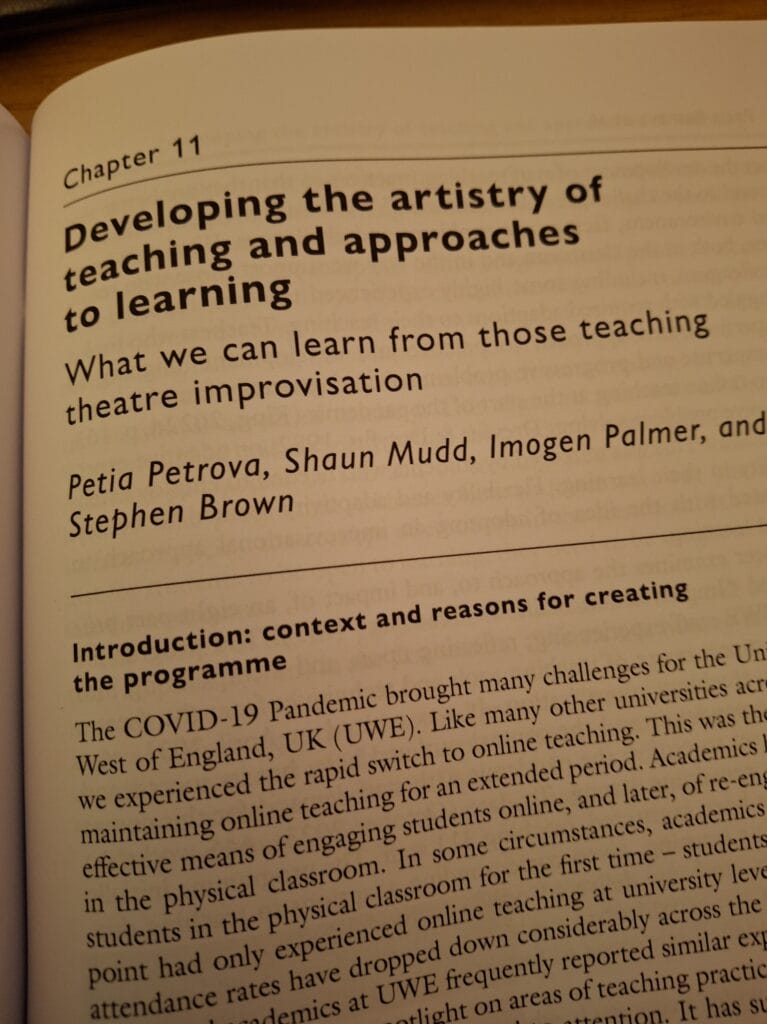
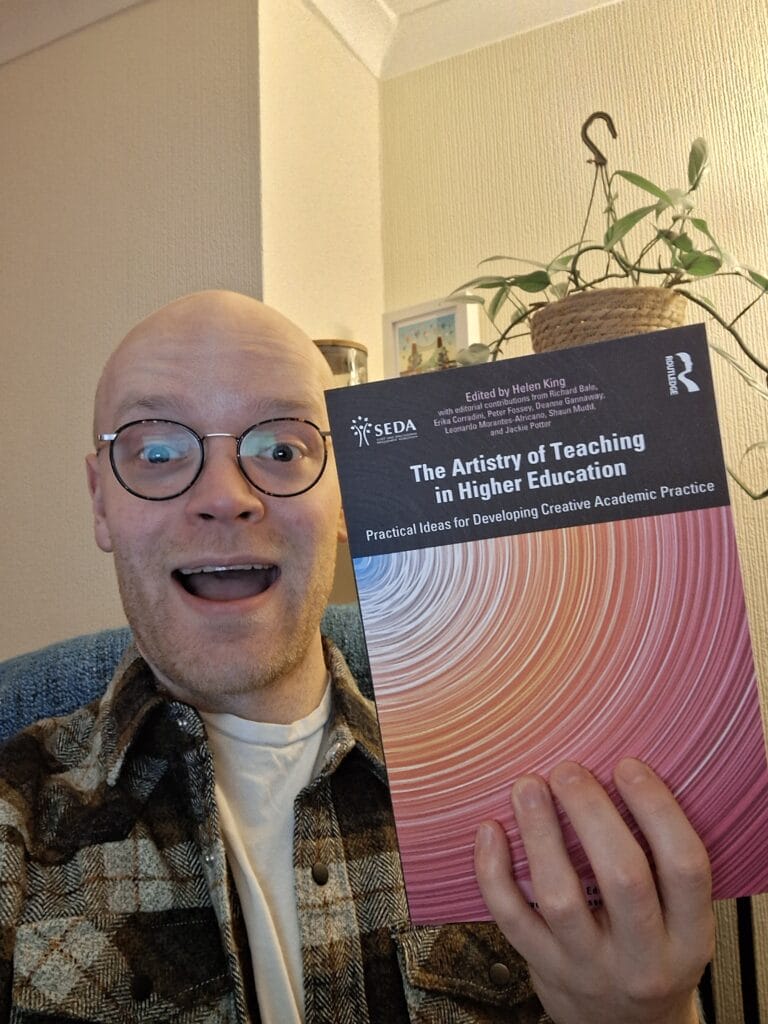
I’m over the moon to share that I’ve been featured in a book for the very first time! 🎉 The book, The Artistry of Teaching in Higher Education, is a collection of practical and creative ideas designed to inspire and elevate university teaching practices, specifically aimed at university educators looking to enhance their teaching with creative approaches. One of the chapters focuses on a course that my friend Imo and I created together at the Bristol Improv Theatre called “Improv Skills for Teaching,” designed specifically for university educators who are looking to enhance their teaching with creative techniques. 

It feels incredible to see the work that we’ve done being recognised in this way. The chapter I contributed to, written by colleagues from UWE Dr Petia Petrova and Dr Shaun Mudd, explores how improvisational theatre techniques can be used to support effective and engaging teaching practices. We’re talking about building rapport, embracing imperfection, and creating spaces where everyone—students and teachers alike—can be brave. The kind of space where learning feels not just possible, but joyful.
Improv Skills for Teaching
I’m clearly trying to hide my excitement…

For more information on how you can incorporate improv principles into your everyday working life, check out my blog post on ‘Improv Skills for Work‘.

✨ The Spark

The journey started, like many good stories, in a moment of crisis: the pandemic. Universities had to pivot quickly to online teaching, and as anyone who had to shift their training, workshops, or teaching online will tell you, it wasn’t easy. For both students and educators, it was a challenging time that highlighted a deep need for connection, spontaneity, and flexibility. Suddenly, teaching required much more than just knowledge—it required a sense of artistry. That’s where our work with improvisation came in.

Petia was taking an online improv class at the time and began wondering how the principles of improv could translate into the online learning environment. We saw an opportunity to take the tools we’d been using on stage and apply them to the (now virtual) classroom. The skills we’d honed in improv—building trust, supporting each other, and embracing the unexpected—felt tailor-made for this new teaching environment. And so, “Improvisation Skills for Teaching” was born, a programme that invited educators to step outside their comfort zones, to be playful, and to reconnect with their own joy in teaching.

🗺️ The Journey

Working with Petia and Shaun, we developed and delivered the programme to staff at UWE (University of the West of England) and beyond. Since launching, we’ve run this programme for 13 cohorts, with the 14th coming up soon. Furthermore, it has reached educators at UWE, the University of Bristol, and St. George’s in London. It’s been an incredible ride, filled with laughter, growth, and some surprising revelations.

What’s so special about this programme is how it reminds us that education isn’t just about knowledge transmission – it’s about human connection (as anyone who has experienced a presentation where the person just reads off the slides will be able to attest to!). It’s about making the classroom a space where everyone feels they belong, even when everything is uncertain. And it turns out, improvisational theatre provides the perfect toolkit for that.

🔦 The Spotlight on Improv Skills for Teaching

So now, here we are, a few years after it all started, and our work has found its way into a book! The Artistry of Teaching in Higher Education is for educators looking to bring more creativity, connection, and authenticity into their teaching practice. It’s a guide for those who want to go beyond the traditional and embrace the messiness that often accompanies great teaching.

The chapter on improv skills is full of practical tools that educators can use to make their classrooms more inclusive, responsive, and, most importantly, human. You’ll find activities to help build rapport, encourage active participation, and—my personal favourite—embrace the value of getting it wrong sometimes. Because, as we teach in the course, we don’t ‘fail’, we ‘happy fail’ – because, if you don’t get things a bit wrong sometimes, are you really learning??

Key Takeaways from the Chapter

If you pick up the book (and I highly recommend you do if you’re interested in the art of teaching), here’s what you can expect from the chapter I contributed to:

  • Creating Positive Learning Environments: How to foster bravery and connection between students and educators, and why it’s essential to have the freedom to get things wrong.
  • Your Voice and Presence: Using improvisation to enhance communication skills, be authentic, and make genuine connections in the classroom.
  • Reframing the Teacher-Learner Dynamic: Approaching your teaching from an improv perspective allows you to remove the pressure from yourself as ‘teacher’ and ‘all-knowing-Yoda’ to a partner in the learning environment with the student. 

Conclusion

This moment is a “pinch-me” moment—because being published is something I’ve dreamed about, and here it is, in black and white. But it’s also a moment where people are beginning to recognise the tools of play, connection and engagement can be used, and might even be essential, to domains outside of the improv theatre. 

So, if you’ve ever wondered how improv can make you a better teacher—or just how it might make you more comfortable with life’s curveballs—please check out The Artistry of Teaching, or get in touch with me here or at the Bristol Improv Theatre to see how we might be able to work together!

Speak soon,

Ste 🍵


If you’re interested in personal development and self-improvement, why not sign up for my monthly(ish) newsletter where you’ll find practical tips and join a budding community of improvers?
Categories
AI Coaching Bristol Coaching Life Coaching

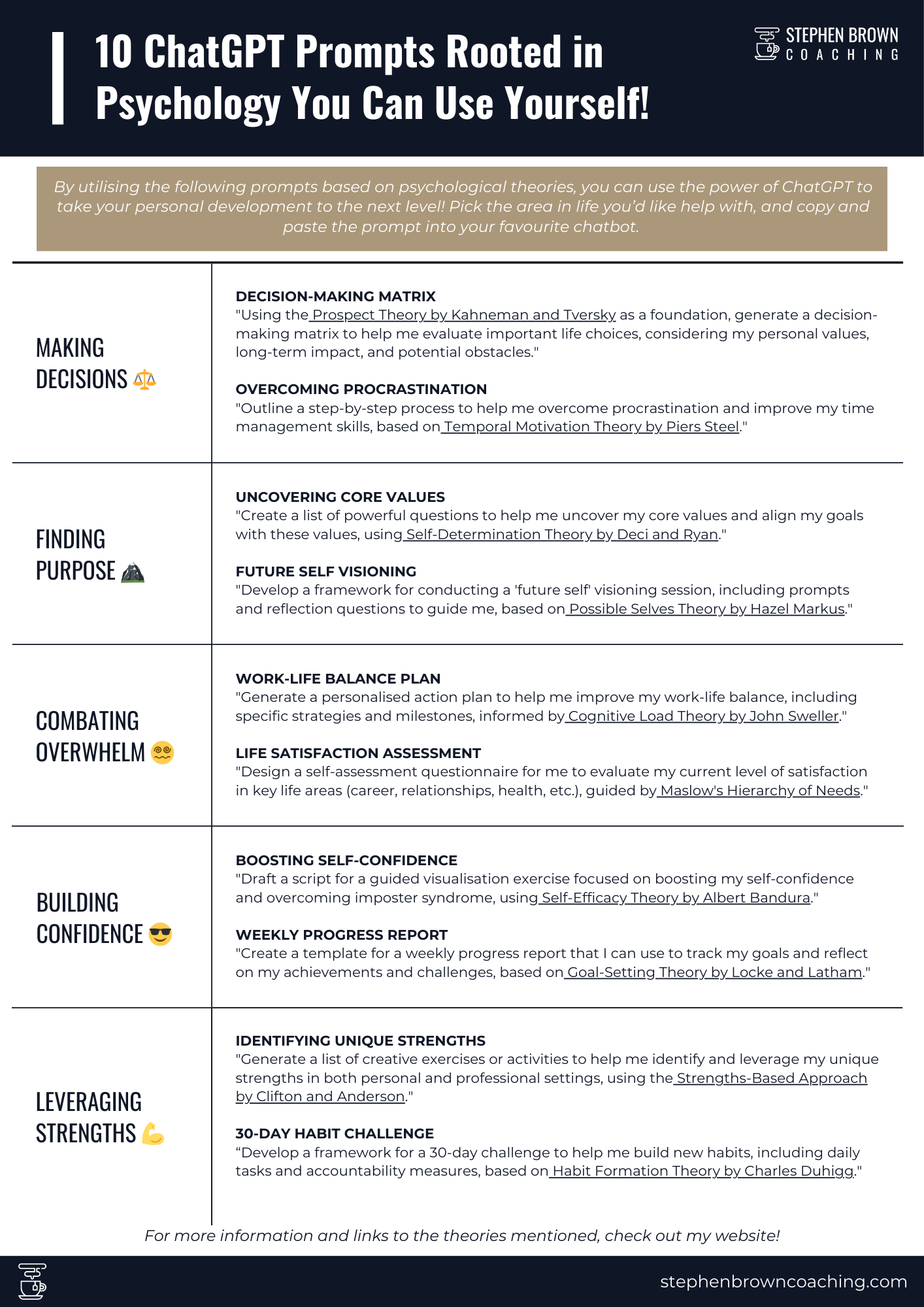
Top 10 ChatGPT Prompts for AI-Powered Personal Growth

In this post, we’ll explore the top 10 ChatGPT prompts for personal growth, grounded in psychological theory. These prompts are designed to address common issues like decision-making, finding purpose, combating overwhelm, and building confidence. Ready to take your personal growth journey to the next level? Let’s dive in.

Looking for more ways to leverage ChatGPT as your personal coach? Check out my other posts in this series.

Overcoming ‘Sticking Points’

At certain points in life, we all face challenges that seem impossible to overcome. These ‘sticking points’ could be anything from struggling to find the motivation to get off the couch, to making critical decisions about your career, relationships, or lifestyle. You might also find yourself overcommitting, unable to say ‘no’ despite an already packed schedule.

One powerful way to move past these obstacles is by tapping into psychological insights to better understand your feelings and behaviours. However, while psychology provides the “why,” coaching—and tools like ChatGPT—help you take action. This combination of understanding and practical application is key to making meaningful progress.

The Power of ChatGPT in Coaching

The beauty of tools like ChatGPT is in their ability to distil and apply huge amounts of information almost instantly. With the right prompts, we can take psychological theories and generate personalised action plans, insightful questions, and creative exercises tailored to your specific situation.  

The Importance of Personalisation

Personalisation is key in coaching. Everyone’s brain is different and will respond to different things at different times. If this wasn’t the case there would just be a single self-help book and it would solve all our problems! 

So, by tailoring prompts to you and your specific issues, you can address individual needs effectively. Let’s explore these prompts categorised by common coaching challenges.

ChatGPT Prompts for Personal Growth

The Prompts, Their Categories, and Psychological Theories

Click here to download a cheat sheet summary of these prompts to use yourself!

Making Decisions ⚖️

  1. Decision-Making Matrix

Prompt: “Using the Prospect Theory by Kahneman and Tversky as a foundation, generate a decision-making matrix to help me evaluate important life choices, considering my personal values, long-term impact, and potential obstacles.”

  1. Overcoming Procrastination:

Prompt: “Outline a step-by-step process to help me overcome procrastination and improve my time management skills, based on Temporal Motivation Theory by Piers Steel.”

Finding Purpose 🏔️

  1. Uncovering Core Values:

Prompt: “Create a list of powerful questions to help me uncover my core values and align my goals with these values, using Self-Determination Theory by Deci and Ryan.”

  1. Future Self Visioning:

Prompt: “Develop a framework for conducting a ‘future self’ visioning session, including prompts and reflection questions to guide me, based on Possible Selves Theory by Hazel Markus.”

Combating Overwhelm 😵‍💫

  1. Work-Life Balance Plan:

Prompt: “Generate a personalised action plan to help me improve my work-life balance, including specific strategies and milestones, informed by Cognitive Load Theory by John Sweller.”

  1. Life Satisfaction Assessment:

Prompt: “Design a self-assessment questionnaire for me to evaluate my current level of satisfaction in key life areas (career, relationships, health, etc.), guided by Maslow’s Hierarchy of Needs.”

Building Confidence 😎

  1. Boosting Self-Confidence:

Prompt: “Draft a script for a guided visualisation exercise focused on boosting my self-confidence and overcoming imposter syndrome, using Self-Efficacy Theory by Albert Bandura.”

  1. Weekly Progress Report:

Prompt: “Create a template for a weekly progress report that I can use to track my goals and reflect on my achievements and challenges, based on Goal-Setting Theory by Locke and Latham.”

Leveraging Strengths 💪

  1. Identifying Unique Strengths:

Prompt: “Generate a list of creative exercises or activities to help me identify and leverage my unique strengths in both personal and professional settings, using the Strengths-Based Approach by Clifton and Anderson.”

  1. 30-Day Habit Challenge:

Prompt: “Develop a framework for a 30-day challenge to help me build new habits, including daily tasks and accountability measures, based on Habit Formation Theory by Charles Duhigg.”

(learn more about how 30-day challenges can work here)

The Power of ChatGPT Prompts in Personal Growth

Using These Prompts Effectively

Integrating these prompts into your personal growth journey is simple. Start by selecting the prompts that align with your current goals. For additional tips and templates – why not sign up for my monthly newsletter?

ChatGPT is a powerful tool in the personal coaching toolkit. By using these tailored prompts, grounded in psychology, you can gain personalised support, foster your growth, and build towards the life you want. Start implementing these prompts today and witness the transformation!

Let me know how you get on! 

Speak soon,

Ste 🍵


If you’re interested in personal development and self-improvement, why not sign up for my monthly(ish) newsletter where you’ll find practical tips and join a budding community of improvers?
Categories
Coaching Life Coaching

Improv Skills for Work – Supercharge Your Work-Life

Where we explore three key improv skills for work: active listening, creativity, and creating a supportive environment.


Ever watch a colleague handle a tough situation with impressive composure, while others seem to melt under pressure? Their secret weapon might surprise you: improv comedy.

Yes, the same improv you might associate with wacky costumes and hilarious games on TV! But here’s the thing: the skills honed on the improv stage translate so well to our modern, ever-changing world of work. Not only has improv been shown to provide general life benefits such as reducing social anxiety and building confidence, but it can also bring other benefits to our working life.

So, let’s dive into three key improv skills for work that you can use to transform your work life, backed by research…

Improv skills for work

1. Active Listening and Communication: The Art of Truly Being Heard

In improv, truly listening to your scene partner and responding based on understanding is essential.  Imagine a scene where one person keeps talking about their pet goldfish, while the other keeps trying to discuss a missing diamond necklace. It might be initially funny, but there’s nowhere for the scene to go… The same goes for work.

Active listening is the foundation of effective communication, as Gardner et al. (2019) point out. By focusing on what your colleagues are saying, asking clarifying questions, and showing genuine interest, you can dramatically improve communication across the board.

Taking Action: Challenge yourself to become a listening ninja! During your next meeting, ditch the multitasking and truly focus on what each person is saying. Summarise key points to show you’re engaged, and ask open-ended questions to encourage further discussion. You’ll stand out by purely giving your full attention in our very distracted world!

2. Building Creativity and Open-Mindedness: Thinking Outside the Box, Together

Improv thrives on embracing new ideas and building upon them.  One player might start a scene with a suggestion of “outer space,” and their partner might add “lost tourist with a broken spaceship.”  This ability to think outside the box and be receptive to diverse perspectives is exactly what fuels creative problem-solving in the workplace. Research by Lewis & Lovatt (2013) highlights the link between improv and fostering a more creative mindset.

Taking Action: The next time you’re brainstorming, incorporate the “Yes, And…” principle from improv. When someone throws out an idea, no matter how unusual, build upon it with a positive “Yes, And…” instead of shutting it down. You might be surprised at the innovative solutions that you come up with!

3. Creating an Environment of Trust, Support, and Psychological Safety:  We’re All in This Together!

Improv relies on fostering trust and collaboration between scene partners. Performers support each other’s ideas, knowing they’re all working towards creating a fun and engaging scene together. This translates directly to the workplace. When team members feel safe to take risks, share ideas freely, and support one another, a strong sense of psychological safety is created. This, in turn, fosters a more positive and collaborative work environment, as Gino (2019) suggests.

Taking Action: If you’re looking to build trust and psychological safety in your team, try incorporating improv games into your next meeting, workshop or team-building activity. Games that emphasise collaboration and building on ideas are a great way to break the ice and encourage team members to support each other.

Improv Skills for Work – Ready to Improv Your Work Life?

Here are some additional tips to get you started:

  • Start small: Don’t feel pressured to jump into full-blown improv workshops right away. Improv can be intimidating for a lot of people! Begin by incorporating simple improv principles into your daily interactions (like active listening and building on others’ ideas).
  • Embrace the fun: Improv is all about having fun and being playful. Don’t be afraid to step outside your comfort zone and experiment. Laughter is a powerful tool for building connection and reducing stress in the workplace.
  • Seek out resources: There are many online resources available to help you learn more about improv and its benefits in the workplace. You can also find improv classes and workshops offered in most major cities.

So, why not give it a try and see how much you can improv your work life?

See you soon!

Ste


Feeling curious to learn more about improv and how it can transform your work life? Check out the Bristol Improv Theatre to see how we can work with your organisation. Want to focus on yourself? Check out my blog on the ‘As if’ principle to improve your confidence.

If you’re interested in personal development and self-improvement, why not sign up for my weekly(ish) newsletter, or click here to receive news of my future online courses?

Categories
AI Coaching Coaching Life Coaching

Embrace Personal Growth: ChatGPT – Your AI Life Coach

How could you utilise the power of AI chatbots, like ChatGPT, to create your own AI life coach experience?

In the realm of personal development, the pursuit of self-discovery and growth is an ongoing journey. As individuals, we constantly seek guidance and support to navigate life’s challenges, enhance our well-being, and achieve our aspirations. While traditional life coaching has long been a valuable resource, the emergence of AI chatbots has the potential to introduce a new dimension to the coaching experience.

AI Chatbots, like ChatGPT, hold immense potential as a powerful tool for many areas of life. Life coaching is no exception! With its ability to process vast amounts of information, generate human-quality text, and engage in meaningful conversations, ChatGPT offers a unique opportunity to enhance the accessibility and effectiveness of life coaching.

The Benefits of an AI Life Coach

AI Life Coach. SB Coaching.

Accessibility and Convenience

The first benefit is accessibility. Life coaching opportunities can often be restricted by time, geography and financial factors. ChatGPT, however, breaks down these barriers by offering accessible and convenient coaching support.

Individuals can engage in coaching-like conversations with ChatGPT from the comfort of their homes, at any time of their choosing. This accessibility allows for more frequent and consistent coaching interactions, fostering a stronger sense of connection and support.

Elevating Journalling

It can be useful to think of using ChatGPT for these types of conversations as an enhanced or augmented journaling experience, sitting somewhere in the middle of traditional journaling and life coaching. 

A fundamental aspect of both journaling and life coaching lies in increased self-awareness and encouraging individuals to reflect on their thoughts, beliefs, and behaviours. ChatGPT, through its ability to ask insightful questions and provide prompts for introspection, can facilitate this process of self-exploration.

By engaging in open-ended conversations with ChatGPT, individuals can delve deeper into their motivations, values, and patterns of behaviour. ChatGPT’s ability to analyse language and identify underlying themes can help individuals uncover hidden insights and gain a clearer understanding of their thought processes.

Things to be Aware of With an AI Life Coach

While using chatbots for some life coaching can provide valuable insights and support for personal growth and development, it is important to note that it should not be considered a replacement for a qualified life coach or therapist. ChatGPT is a tool that can be used to complement professional coaching or therapy services, but it is not a substitute for the expertise and guidance of a trained professional.

If you are experiencing significant emotional distress, mental health challenges, or trauma, it is crucial to seek professional help from a qualified life coach or therapist. These professionals have the training, experience, and qualifications to provide the appropriate care and support for individuals facing complex emotional or mental health issues.

Your Personalised Coaching Prompt for ChatGPT

By copying and pasting the following prompt into an AI chatbot you can simulate a coaching conversation that can provide valuable insights into your behaviours and motivations. 

“I’d like to have a coaching conversation about [topic you’d like to explore]. Take the perspective of a world-leading life coach using a mainly non-directive approach and looking to get to the root cause of the problem. Ask me challenging questions one at a time and give me to opportunity to reflect and answer.”

Struggling with where to start? Here are some suggestions for common life-coaching topics to provide you with some inspiration:

  • Overcoming procrastination, increasing motivation and setting effective goals
  • Cultivating a growth mindset and pushing yourself out of your comfort zone
  • Navigating uncertainty, managing anxiety and focusing on what you can control
  • Building your confidence and sense of self-worth
  • Discovering passions, purpose and direction
  • Fostering healthy relationships and improving communication
  • Reducing stress and creating boundaries
  • Improving your money management, financial planning or getting out of debt

Chatbots are still experimental, so give it a try and see if you can uncover anything about yourself! You can even change the prompt for ChatGPT to take on the personality of someone who you admire. 

I’d be interested to see how you get on – let me know!

See you soon!

Stephen

Categories
Bristol Coaching Life Coaching

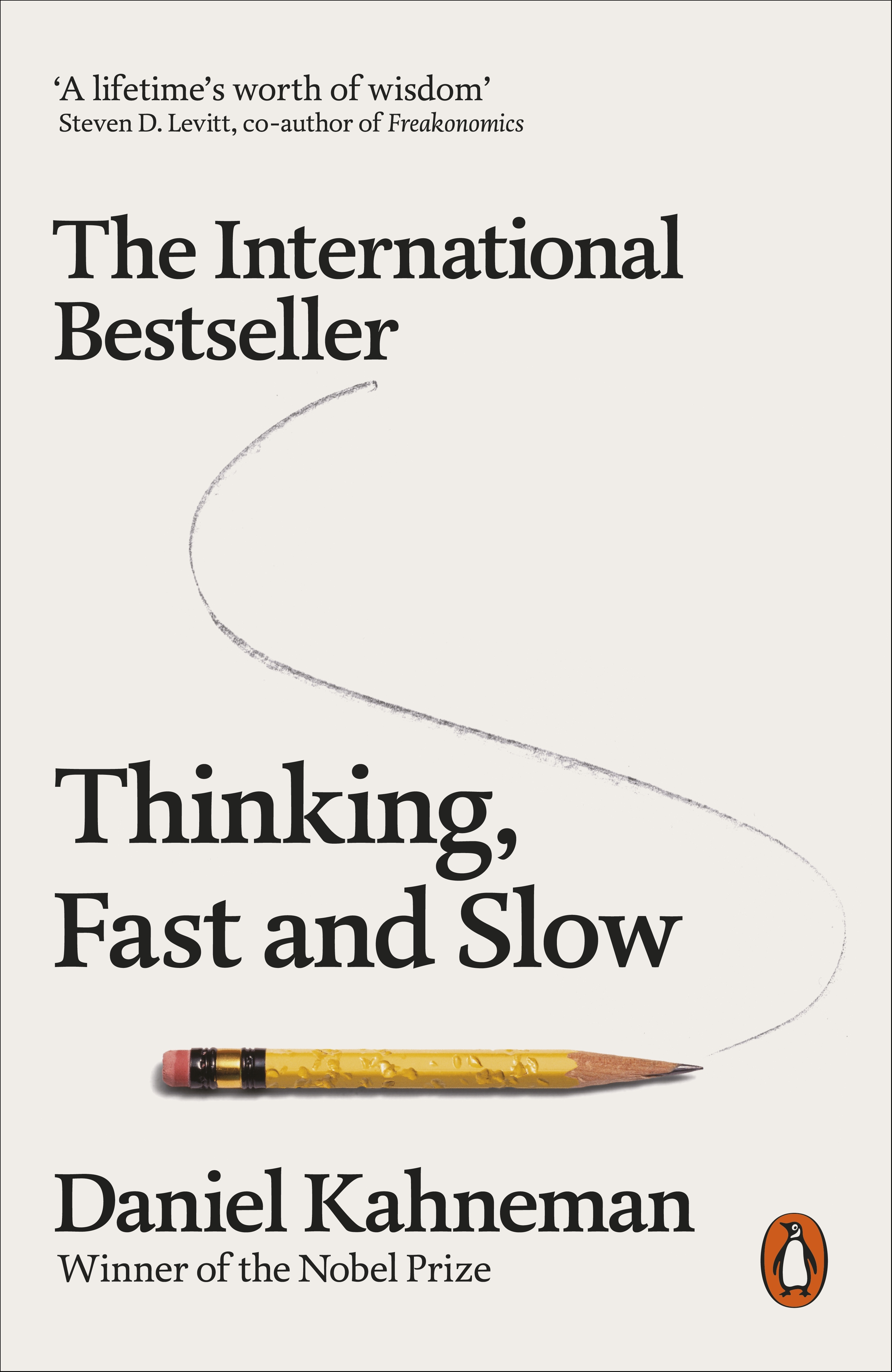
Make Better Decisions: Thinking, Fast and Slow Book Summary

Amidst the daily hustle and bustle of our lives, we make countless choices, from seemingly insignificant to life-altering ones, that shape our experiences and determine our paths. Have you ever wondered what drives these decisions? Why do we sometimes make choices that we later regret? In his groundbreaking 2011 book, “Thinking, Fast and Slow,” Nobel Prize-winning psychologist Daniel Kahneman sheds light on the intricate workings of the human mind, revealing that our decisions are often influenced by two distinct systems of thinking: System 1 and System 2.

System 1, our fast and intuitive mode of thinking, operates effortlessly, generating quick judgments and instant reactions. It’s what we use when swerving to avoid an obstacle or deciding what to eat for breakfast. System 1 is adept at pattern recognition and quick responses, making it an efficient tool for navigating everyday situations.

In contrast, System 2 is our slow, deliberate way of thinking, employed for complex tasks that demand focused attention and mental exertion. It’s what we use when solving intricate puzzles or making major life decisions. System 2 engages in rational analysis and complex computations, enabling us to make well-considered choices.

The Power and Limitations of Dual Thinking

While both System 1 and System 2 play valuable roles in our decision-making processes, they also have their own limitations.

System 1, despite its efficiency, is prone to biases and heuristics, mental shortcuts that can lead to errors in judgment. For instance, our tendency to anchor our decisions on initial information, known as the anchoring effect, can lead to suboptimal choices.

System 2, though capable of rational analysis, is vulnerable to mental fatigue and distractions. When our attention is divided or our minds are weary, System 2 can falter, leading to impulsive decisions driven by System 1’s biases.

Make Better Decisions: Be Aware of Cognitive Biases

Our cognitive biases and expectations about the way the world works influence our thinking and decision-making. We all have cognitive biases, otherwise, we wouldn’t be able to function in our daily lives. The trick is to identify which are useful, and which are not. By being aware of those biases our brains are influenced by we are able to take the first step in mitigating their impact. Here are some common ones to be aware of.

  • Prospect Theory: People are more averse to losses than they are motivated by equivalent gains. Recognizing this bias can reshape how you approach risks and rewards.
  • Endowment Effect: We tend to ascribe higher value to things simply because we own them. Be mindful of this bias when evaluating possessions or investments.
  • Overconfidence: Assess your level of confidence in your decisions. Overconfidence can lead to poor judgments. Embrace a humble approach to decision-making.
  • The Sunk Cost Fallacy: We are more likely to stick with a decision if we’ve already invested (time, money, effort) in it previously, even if it’s not likely to provide us with positive returns. 

Overcoming Cognitive Biases: The Path to Informed Decisions

Kahneman’s work doesn’t just expose the limitations of our thinking; it also provides practical tools to navigate the mental maze and make informed decisions. By understanding the interplay between System 1 and System 2, we can harness the power of dual thinking to make more rational choices.

Here are some actionable tips you can apply to your daily life:

  • Slow Down and Engage System 2: When facing important decisions, resist the urge to react impulsively. Engage System 2 by pausing, carefully considering the options, and evaluating the long-term consequences.
  • Challenge Your Intuition: Don’t blindly trust your gut feelings. Question your initial assumptions and seek out disconfirming evidence to challenge your biases.
  • Seek Diverse Perspectives: Surround yourself with people who hold different viewpoints. Engage in open and honest discussions to broaden your understanding and consider alternative perspectives.
  • Beware of Emotional Influences: Emotions can cloud our judgment. Recognize when emotions are driving your thinking and strive to detach yourself from their influence.
  • Embrace Uncertainty: Accept that uncertainty is an inevitable part of life. Avoid making decisions based on fear or a need for absolute certainty.
  • Maintain a Decision Journal: Regularly reflect on your decisions and the reasoning behind them. This can help you identify patterns and areas for improvement.

Transforming Your Decision-Making Process

By understanding the dual-process theory and applying these practical strategies, you can transform your decision-making process, leading to choices that align with your long-term goals and values. Embrace the journey of understanding your mind, and you’ll embark on a path towards better decisions and a more fulfilling life.

Make Better Decisions. Thinking, Fast and Slow by Daniel Kahneman

If you’d like more awareness in your own mind, why not try adopting a Monthly Check-in? Or if you’re looking to make bigger changes, check out my New Year’s Reset course, or get in touch for some personal coaching.

Categories
Bristol Coaching Life Coaching

Stoicism for Modern Life

Stoicism for Modern Life: How to Live a Good Life in Uncertain Times

Do you ever feel overwhelmed by the challenges and uncertainties of modern life? Do you wish you could be more calm, confident, and happy?

If so, you might benefit from learning about Stoicism.

Stoicism is an ancient Greek philosophy that teaches us how to live a good life in the face of adversity. It is a philosophy that is based on the belief that we can control our own thoughts and emotions, but that we cannot control the world around us.

Stoicism is not about being emotionless or indifferent. It is about being rational, resilient, and virtuous. It is about finding peace and joy in what we have, rather than what we don’t have.

Stoicism is also very practical and relevant for our modern times. Its principles can help us to cope with stress, improve our relationships, and achieve our goals.

The Key Principles of Stoicism

Stoicism is a rich and complex philosophy, but it can be summarised by four main principles:

  1. Focus on what you can control. This is the core idea of Stoicism. We can control our own thoughts and emotions, but we cannot control the world around us. Therefore, we should try to focus more on the things that we can control and let go of the things that we can’t control.
  2. Accept what you cannot change. Another important Stoic principle is to accept the things that we cannot change. This doesn’t mean that we have to like or agree with these things, but it does mean that we should try to accept them as they are and move on.
  3. Live in the present moment. The past is gone and the future is not yet here. The only moment that we have is the present moment. Therefore, we should focus on living in the present moment to the fullest.
  4. Be grateful for what you have. It is easy to focus on the things that we don’t have or want. But it is important to be grateful for the things that we do have or have achieved. This will help us to appreciate our lives and to be happier.

How to Apply Stoicism for Modern Life

There are many ways to apply Stoic principles to your life. Here are a few examples:

  • When you are faced with a difficult situation, ask yourself: What can I control in this situation? What can I not control? Focus on the things that you can control and let go of the things that you cannot control.
  • When you are feeling negative emotions, ask yourself: Are my thoughts and emotions helpful or unhelpful? If they are unhelpful, try to kindly challenge them. What could be another possible explanation? Is there another perspective that you could adopt? When you catch yourself in unhelpful thinking patterns, try to replace them with more helpful thoughts and emotions. Eventually thinking more positively will become your default.
  • Take some time each day to reflect on the things that you are grateful for.
Stoicism for modern life

Here are some specific examples of how to apply Stoicism for modern life:

  • At work: If you are stuck in a traffic jam on the way to work, don’t get angry or upset. You cannot control the traffic. Instead, focus on what you can control, such as listening to your favourite podcast or making a to-do list for the day.
  • In relationships: If your partner does something that you don’t like, don’t get into an argument. You cannot control your partner’s behaviour. Instead, focus on what you can control, such as calmly communicating your feelings and needs.
  • In personal development: If you are trying to lose weight, don’t get discouraged if you have a setback. Everyone has setbacks. Instead, accept that you cannot change the past, but you can focus on what you do next, such as eating healthy foods and exercising regularly.

Conclusion

Stoicism is a powerful philosophy that can help us to live more resilient and fulfilling lives. By applying Stoic principles to our lives, we can learn to accept what we cannot change, focus on what we can control, live in the present moment, and be grateful for what we have.

If you are interested in learning more about Stoicism, I recommend reading the book ‘Meditations’ by Marcus Aurelius. It is a classic Stoic text that is full of wisdom and practical advice, and ‘The Daily Stoic’ by Ryan Holiday is a great resource for snippets of stoicism (Ryan also has a mailing list you can sign up to for a daily stoic thoughts and quotes, I’d really recommend checking it out on his website).

You can also check out some other relevant topics on my blog, such as developing a Growth Mindset, or using the ‘As If’ principle for more tips and advice on living a good life.

See you soon! Stephen

Categories
Bristol Coaching Life Coaching

The Benefits of a Monthly Self-Check-In

The Monthly Self-Check-In: How to Reflect on Your Progress and Stay on Track

It’s easy to get caught up in the day-to-day hustle and bustle of life and forget to take some time for yourself. But taking time to reflect on your progress and goals can be incredibly beneficial, especially if you do it on a regular basis.

Monthly or weekly self-check-ins are a simple way to identify your strengths and weaknesses, set achievable goals, track your progress, and stay motivated. They can also help you to improve your overall performance and well-being.

How to conduct a monthly self-check-in

To conduct a monthly self-check-in, set aside some time at the end of each month to reflect on the following questions:

  • What went well this month?
  • What are some areas where I could improve?
  • What are my goals for next month?
  • What steps do I need to take to achieve my goals?

Once you have reflected on these questions, take some time to write down your thoughts and findings. This will help you solidify your thoughts and plan for the coming month.

Benefits of a monthly self-check-in

There are many benefits to taking time for monthly self-check-ins, including:

  • Increased self-awareness: Reflecting on your progress and goals can help you to become more self-aware. This can help you to identify your strengths and weaknesses and to set more realistic goals.
  • Improved motivation: Knowing what you want to achieve and having a plan for how to achieve it can help you stay motivated and on track.
  • Better performance: By tracking your progress and identifying areas where you can improve, you can gradually improve your overall performance.
  • Reduced stress: Taking time to reflect on your progress and goals can help to reduce stress. When you know what you’re working towards and you have a plan for how to get there, you’re less likely to feel overwhelmed.

Tips for getting started

Here are a few tips for getting started with your own monthly self-check-ins:

  • Set aside time at the end of each month to reflect on your progress and goals. Try making it a treat for yourself!
  • Find a quiet place where you won’t be disturbed.
  • Write down your thoughts and findings in a journal or notebook.
  • Be honest with yourself about your strengths and weaknesses.
  • Set achievable goals for the coming month.
  • Identify the steps that you need to take to achieve your goals.
  • Review your monthly self-check-in at the beginning of the following month to stay on track.

Conclusion

Taking time for monthly self-check-ins is a simple but effective way to improve your overall performance and well-being. If you’re not already doing it, I’d really encourage you to give it a go and start one today.

If you want to try it for yourself, download my free monthly self-check-in worksheet (coming soon!) to help you get started.

What are your thoughts? Have you taken some time for yourself and tried a monthly self-check-in? Share your experiences in the comments!

If you’re interested in learning more topics and concepts to help you improve your life, why not check out my post on Developing a Growth Mindset, The ‘As If’ Principle, or check out my Reset Course?

See you soon,

Stephen

Categories
Bristol Coaching Life Coaching

Fake It Until You Make It with the ‘As If’ Principle

Do you ever feel like you’re not good enough for your goals? Like you don’t have the skills, the confidence, or the luck to succeed?

You’re not alone. Many people struggle with self-doubt and impostor syndrome. But what if I told you that there’s a simple way to overcome these feelings and achieve your goals anyway?

It’s called the ‘As If’ Principle, and it’s a powerful psychological technique that can help you to become the person you want to be.

What is the ‘As If’ Principle?

The ‘As If’ Principle is based on the idea that your behaviour influences your thoughts, feelings, and attitudes, rather than the other way around.

In other words, if you act ‘as if’ you’re already the person you want to be, you’ll start to feel and think like that person too.

For example, if you act confident, you’ll start to feel confident. If you act successful, you’ll start to think successful. And if you act happy, you’ll start to feel happy.

It sounds too good to be true, right? But there’s actually a lot of scientific evidence to back up this principle.

How does it work?

The ‘As If’ Principle works by creating a feedback loop between your behaviour and your brain.

When you act a certain way, your brain receives signals from your body that tell you what kind of person you are. For example, when you smile, your brain releases chemicals that make you feel happier. When you adopt a power pose, your brain lowers your stress hormone and boosts your confidence hormone.

Your brain then adjusts your thoughts and feelings accordingly, which in turn reinforces your behaviour. For example, when you feel happier, you’re more likely to smile. When you feel more confident, you’re more likely to adopt a power pose.

This feedback loop creates a positive spiral that can help you to achieve your goals.

How can I use it to achieve my goals?

Using the ‘As If’ Principle is easy. All you need to do is choose the person you want to be and start acting ‘as if’ you’re already that person.

For example, if you want to be more confident, start acting more confident. Walk with your head held high, make eye contact, and speak clearly and assertively.

If you want to be more successful, start acting more successful. Dress professionally, set high standards for yourself, and surround yourself with successful people.

At first, it may feel fake or awkward. But don’t worry. The more you act ‘as if’, the more natural it will become. And the more natural it becomes, the more likely you are to achieve your goals.

You don’t have to change everything at once. Just pick one thing that you want to improve and start doing it today. Then when it becomes a habit, try another one.

Examples of the ‘As If’ Principle in action

If you’re still sceptical about the ‘As If’ Principle, here are some examples of how it has been proven by psychological research:

  • Strack et al. (1988) showed that holding a pen in a way that mimics a smile makes cartoons more funny, implying that smiling can make you happier.
  • Carney et al. (2010) found that adopting high-power poses before a mock interview improves performance, confidence, and hormonal balance, indicating that acting powerful can make you feel powerful and less stressed.
  • Dweck et al. (1999) demonstrated that teaching students that intelligence can be improved through effort increases their persistence, enjoyment, and achievement in challenging tasks, suggesting that acting capable can make you more motivated and successful.

(More on this idea of the Growth Mindset on my blog [Link] and in my book review [coming soon!])

Want to learn more about the ‘As If’ Principle? 

If you’re interested in learning more about the ‘As If’ Principle, I recommend reading the book Rip it Up by Richard Wiseman. It’s a great book that will give you all the tools you need to start using the ‘As If’ Principle to achieve your goals. And if you want to read more about “Rip it up!” check out my book review [coming soon!]

You can also subscribe to my blog or follow me on social media for more tips and advice on how to achieve your goals. Why not check out my post on the benefits of a monthly self-check-in next?

What are your thoughts on the ‘As If’ principle? Share them in the comments below!

See you soon

Stephen

Categories
Bristol Coaching Life Coaching

Develop a Growth Mindset: The Key to Success

Do you believe that your intelligence and abilities are fixed, or that they can be developed through hard work and dedication? If you believe the former, you have a fixed mindset. If you believe the latter, you have a growth mindset.

When I was younger, throughout school, I believed that other people were just born with the skills or confidence that I didn’t have, and it held me back. I gave up when things became too difficult or there were barriers in my way.

I thought that perhaps I just wasn’t “that type of person”, whether that was being confident, academic, or athletic. This is a fixed mindset.

But what if I told you that there’s a better way to think about yourself and your potential? A way that can help you to overcome challenges, learn from mistakes, and achieve your goals?

Growth Mindset

It’s called a growth mindset. A growth mindset is the belief that your abilities can be developed through dedication and hard work. You can always improve and grow.

As soon as I started learning about psychology and the idea of a growth mindset, things changed for me. And not just academically, or how I did in school. It had a profound effect on how I saw myself in life more generally.

I started taking on more challenges, could better persevere in the face of setbacks, and saw mistakes as learning opportunities rather than failures.

And this isn’t just my experience. There’s plenty of research to support the benefits of a growth mindset.

The concept of a growth mindset was introduced by Carol Dweck, who has conducted decades of research on how people’s mindsets affect their motivation, performance, and success.

She has found that people with a growth mindset are more likely to achieve their goals than people with a fixed mindset. For example, one study found that students who were taught that intelligence can be improved through effort (i.e., a growth mindset) were more likely to earn higher grades, enjoy their work, and persist in challenging courses than students with a fixed mindset [1].

Another study found that employees with a growth mindset were more likely to be promoted and earn higher salaries than employees with a fixed mindset [2].

How to develop a growth mindset

So, how do we develop a growth mindset? Well, it takes a bit of time and effort, but it is worth it. For me, it’s been one of the changes I’ve made that’s had the biggest impact on my life.

Here are some practical tips from Dweck’s research (and my experience!) that can help you develop a growth mindset:

  • Learn from your mistakes. Everyone makes mistakes. The important thing is to learn from them and move on. Don’t dwell on your mistakes or beat yourself up about them.
  • Celebrate your successes. When you achieve a goal, take the time to celebrate your success. This will help you to stay motivated and to keep moving forward.
  • Embrace challenges. Don’t be afraid to step outside of your comfort zone and try new things. Challenges are opportunities to learn and grow.

And, as you’re doing these things, try to separate your actions from your identity. Start to think about success and failure in terms of your effort and approach. If you fail, learn and adjust. Take some time to reflect and think of one thing you can do differently next time. If you succeed, celebrate the work you’ve put in to achieve that success. Reflect and think of one thing you did that contributed to your success, and how you might do more of that in the future.

Conclusion

For me, developing a growth mindset is one of the building blocks to achieving success in life – whatever that means to you. Believing that you can always improve and grow through dedication and hard work improves your resilience, learning, and ability to navigate some of the challenges that life throws at you.

If you are interested in learning more about growth mindset, I recommend reading ‘Mindset’ by Carol Dweck [3]. It is a great book that will give you all the tools you need to start developing a growth mindset.

You can also subscribe to my blog, or YouTube or follow me on social media for more tips and advice on how to develop a growth mindset and achieve your goals. If you’re wanting to make positive changes straight away – check out my New Year’s Reset Course and give yourself a ‘reset’ whenever you like!

See you soon, Stephen


References 

[1] Blackwell, L., Trzesniewski, K., & Dweck, C. (2007). Implicit theories of intelligence predict achievement across an adolescent transition: A longitudinal study and an intervention. Child Development, 78(1), 246-263. 

[2] Heslin, P., & Keating, L. (2017). In learning mode? The role of mindsets in derailing and enabling experiential leadership development. The Leadership Quarterly, 28(3), 367-384. 

[3] Dweck, C. (2017). Mindset: Changing the way you think to fulfil your potential. Hachette UK.

Categories
Coaching New Years Reset Course 2021

Mindful Action: Taking Action on Your Goals

Hey everyone, Stephen here! Welcome to Week 5 of the reset course, diving deeper into the “mindful action” module. Last week, we tackled goal planning. This week, we’ll explore strategies to take action and actually achieve your goals.

https://youtu.be/G7QWedt2C4U

We all know planning and dreaming are crucial. But as author Steve Maraboli says, “Take Action! An inch of movement will bring you closer to your goals than a mile of intention.” Taking mindful action is the key to real progress.

Mindful Action - Steve Maraboli

While it sounds simple, following through can be tricky. These tips, alongside the final video on reflection, will equip you for success: 

Schedule Time for Action

To-do lists are great, but often tasks linger, leading to procrastination and frustration. Instead, schedule specific times for your goals in your calendar or set an alarm. Block out focused work periods when you have the most energy. Remember, you’re more likely to complete a task if you dedicate a specific time slot for it.

Chunking and the Pomodoro Technique

Our brains thrive on focused work. Multitasking hinders productivity. Chunking involves grouping similar tasks together. Dedicate an hour to “life admin” or “personal finance,” tackling tasks one by one.

The Pomodoro Technique is another game-changer (check out my full blog post dedicated to it here!). Set a timer for 25 minutes and focus intensely on a single task. When the timer goes off, take a short break. This method helps maintain focus and prevents burnout.

Minimise Distractions

Eliminate distractions to maximise productivity. Silence your phone notifications, close unnecessary tabs, and find a quiet space to work. You’ll be surprised by how much you can accomplish with minimal distractions.


These are just a starting points. The accompanying worksheet delves deeper into implementing these strategies. Remember, progress takes time. The next video will introduce a powerful tool for achieving your goals. Stay tuned!

Did you find any of these tips helpful? Have you tried similar techniques? Share your experiences in the comments! I’d also love to hear your suggestions for future topics.

See you next week for the final course session on goal reflection!

Stephen